A minimally invasive option for patients who may not be suitable for open-heart valve surgery
Severe aortic stenosis is one of the most serious heart valve conditions, especially in elderly patients and people already living with kidney disease, heart failure, lung disease, cancer, frailty, or other complex medical problems. In many such patients, traditional open-heart surgery may carry a higher risk because the body may not tolerate a major operation, prolonged recovery, or the stress of cardiopulmonary bypass.
This is where TAVR, also called TAVI, has become an important treatment option.
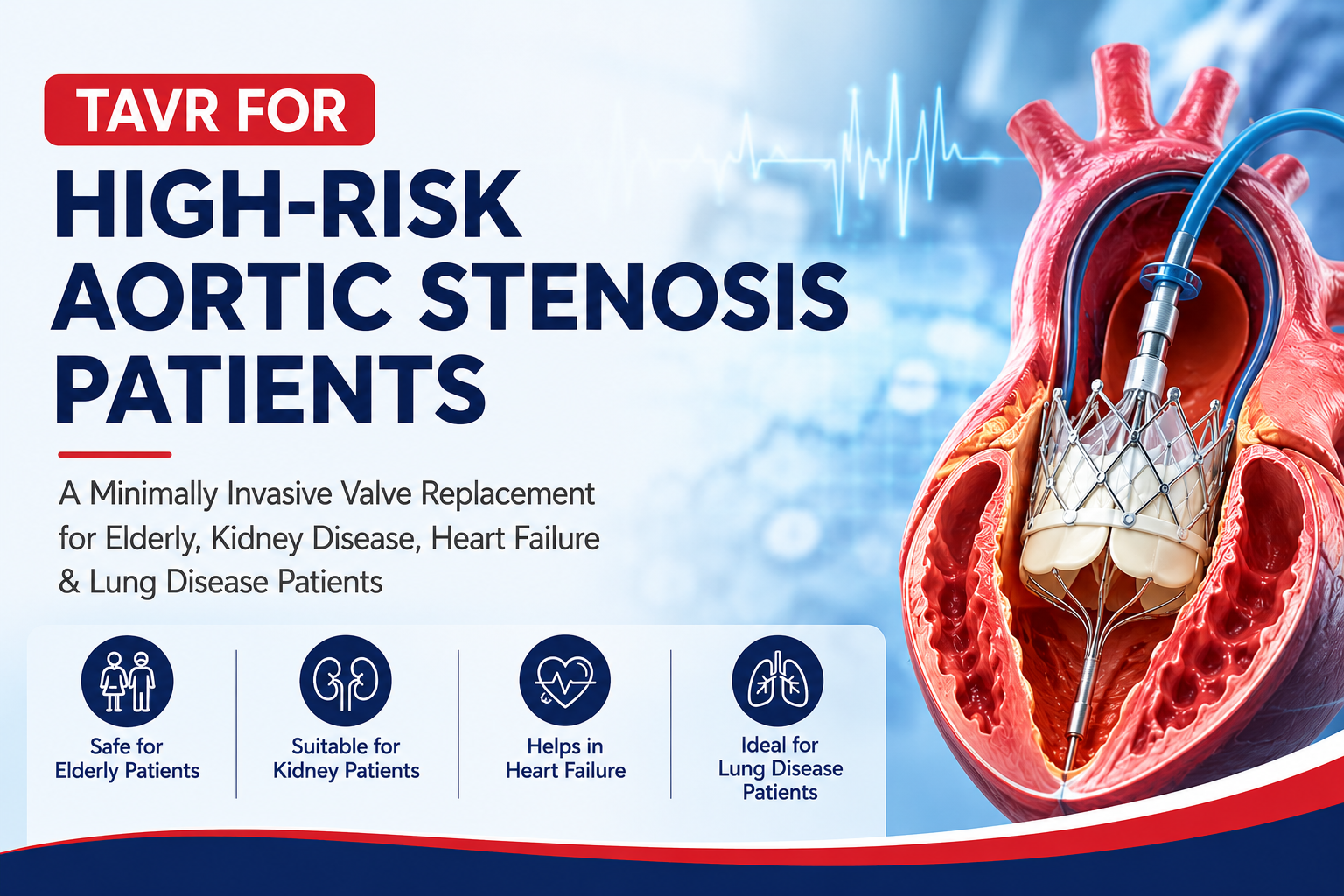
TAVR stands for Transcatheter Aortic Valve Replacement. It is a minimally invasive procedure used to replace a narrowed aortic valve without removing the old valve and without performing open-heart surgery.
For many high-risk patients in Chennai, TAVR can offer a less invasive pathway to treat severe aortic stenosis, improve symptoms, and reduce the burden on the heart.
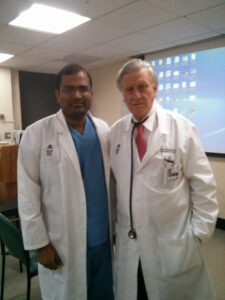
About Dr. S. Nagendra Boopathy
Dr. S. Nagendra Boopathy is an experienced Interventional Cardiologist practicing at Sri Ramachandra Medical Center, part of the Sri Ramachandra Institute of Higher Education and Research, Chennai.
He completed his MBBS from Madras Medical College, Chennai, in 2005, followed by MD in Internal Medicine from PGIMER, Chandigarh, in 2008. He then pursued DM Cardiology from All India Institute of Medical Sciences, New Delhi, in 2011.
Dr. Boopathy has also trained at Mount Sinai, New York, with advanced exposure in interventional cardiology and structural heart disease management. His practice focuses on accurate diagnosis, patient-centred decision-making, ethical care, and guideline-directed treatment for complex cardiovascular conditions.
What is aortic stenosis?
The aortic valve is one of the main valves of the heart. It controls blood flow from the heart to the rest of the body. In aortic stenosis, this valve becomes narrowed, stiff, and calcified. As a result, the heart has to work much harder to pump blood through the narrowed opening.
In the early stages, aortic stenosis may not cause symptoms. But when the disease becomes severe, patients may experience:
- Breathlessness while walking or climbing stairs
- Chest pain or heaviness
- Dizziness or fainting
- Fatigue
- Swelling in the legs
- Worsening heart failure
- Reduced ability to do daily activities
Severe symptomatic aortic stenosis is not just a quality-of-life issue. It can become life-threatening if not treated at the right time. Valve replacement is usually the definitive treatment once symptoms and severity are confirmed.
Why high-risk patients need special planning
Not every patient with severe aortic stenosis is the same. Some patients are younger and otherwise fit. Others may be elderly, frail, or already dealing with multiple health problems. These factors can increase the risk of open-heart surgery.
High-risk patients may include those with:
- Advanced age
- Kidney disease or renal failure
- Poor heart pumping function
- Heart failure
- Chronic lung disease
- Previous bypass surgery
- Cancer or history of cancer treatment
- Severe calcification
- Frailty or reduced physical reserve
- Multiple medical conditions
- Limited ability to tolerate long recovery
For these patients, the decision is not simply “surgery or no surgery.” The real question is: Which treatment gives the patient the safest and most effective outcome based on their overall condition?
TAVR has become especially relevant in this group because it avoids a large chest incision and does not usually require stopping the heart.
How TAVR is performed
In most cases, TAVR is performed through a blood vessel in the groin. A thin tube called a catheter is guided to the heart. The replacement valve is then delivered through this catheter and positioned inside the diseased aortic valve.
Once expanded, the new valve pushes the old narrowed valve leaflets aside and takes over the job of regulating blood flow from the heart to the body.
Because TAVR is less invasive than open surgery, many patients may experience shorter hospital stays, faster mobilisation, and quicker return to routine activities. However, recovery varies depending on the patient’s age, heart function, kidney status, lung condition, and overall health.
TAVR for elderly patients
Aortic stenosis is common in older adults because the valve can become progressively calcified with age. Many elderly patients also have diabetes, hypertension, kidney disease, lung disease, or previous heart procedures. This makes treatment planning more complex.
For elderly patients, the goal is not only to replace the valve. The goal is to improve breathing, walking capacity, independence, and daily function while reducing procedural risk.
TAVR may be considered in elderly patients when the anatomy is suitable and the Heart Team believes the less invasive approach is appropriate.
For families, this is important because many elderly patients delay treatment due to fear of open-heart surgery. A TAVR evaluation can help determine whether a less invasive valve replacement is possible.
TAVR in patients with kidney disease or renal failure
Kidney disease adds another layer of complexity to aortic stenosis treatment. Patients with chronic kidney disease may be more vulnerable to complications from contrast dye, blood pressure changes, infection, and prolonged hospitalisation.
In TAVR planning, kidney protection is a major priority. The medical team may carefully assess kidney function, adjust medications, reduce contrast exposure where possible, and plan imaging in a kidney-conscious way.
This does not mean every kidney patient is automatically suitable for TAVR. But it does mean that patients with kidney disease should be evaluated by an experienced Heart Team before assuming that treatment is too risky.
For patients in Chennai with severe aortic stenosis and renal failure, the key is personalised planning.
TAVR in patients with heart failure or poor heart function
Severe aortic stenosis can place enormous pressure on the heart. Over time, the heart muscle may become weak, enlarged, or unable to pump effectively. This can lead to breathlessness, fluid retention, repeated admissions, and worsening heart failure.
In such patients, valve replacement may help reduce the obstruction and improve forward blood flow. However, poor heart function also increases procedural risk. That is why detailed evaluation is essential.
Doctors may assess:
- Ejection fraction
- Valve severity
- Pulmonary pressures
- Coronary artery disease
- Frailty
- Kidney function
- Rhythm problems
- Overall recovery potential
For patients with very poor heart function, the decision may involve additional support planning, intensive monitoring, and careful discussion with the patient and family.
TAVR in patients with lung disease
Patients with chronic lung disease may have higher risk with open-heart surgery because general anaesthesia, ventilation, and prolonged recovery can be more challenging. Breathlessness may also be due to both lung disease and aortic stenosis, making diagnosis more difficult.
In such cases, the doctor must determine how much of the patient’s breathing problem is due to the heart valve and how much is due to the lungs. This may require echocardiography, CT imaging, pulmonary evaluation, and functional assessment.
If severe aortic stenosis is a major contributor to symptoms and the patient’s anatomy is suitable, TAVR may offer an important alternative to open surgery.
Tests needed before TAVR
A TAVR procedure is not decided based on symptoms alone. It requires structured evaluation.
Common pre-TAVR tests may include:
- Echocardiogram to assess valve severity and heart function
- CT angiography to study valve anatomy and blood vessels
- Coronary angiogram to check for artery blockages
- Kidney function tests
- Blood tests
- ECG and rhythm evaluation
- Frailty and functional assessment
- Lung evaluation when needed
The aim is to answer three important questions:
- Is the aortic stenosis truly severe?
- Is TAVR technically possible and safe?
- Is TAVR the best option compared with surgery or medical management?
This is why TAVR should be planned in a centre with experience in structural heart disease and complex cardiac decision-making.
TAVR vs open-heart surgery: which is better?
There is no single answer for every patient.
Open-heart surgical aortic valve replacement may still be preferred in some younger patients, patients with certain valve anatomies, patients needing additional heart surgery, or those where long-term valve durability is a major consideration.
TAVR may be preferred in elderly patients, high surgical risk patients, frail patients, or those with major medical conditions where open surgery is considered risky.
The right treatment should always be decided after expert evaluation.
Why timing matters
Many patients with severe aortic stenosis wait until symptoms become unbearable. This can be dangerous. Once symptoms such as breathlessness, fainting, chest pain, or heart failure appear, the heart may already be under significant stress.
Early evaluation helps patients understand their options before emergency deterioration occurs. In high-risk patients, waiting too long can make even minimally invasive treatment more challenging.
Families should seek medical review if an elderly patient has unexplained breathlessness, repeated falls, fainting, worsening fatigue, or repeated heart failure admissions.
Why choose an experienced TAVR specialist in Chennai?
TAVR is not just a procedure. It is a complete planning process involving diagnosis, imaging, risk assessment, device selection, vascular access planning, procedural precision, and post-procedure care.
For complex and high-risk patients, experience matters because small decisions can affect safety. These include valve size, access route, contrast use, coronary protection, pacemaker risk, vascular complication prevention, and post-procedure monitoring.
Dr. S. Nagendra Boopathy’s background in interventional cardiology, structural heart disease exposure, and training at premier institutions supports a patient-centred approach to complex valve care in Chennai.
Conclusion
For elderly and high-risk patients with severe aortic stenosis, TAVR has opened an important treatment pathway. It can be especially relevant for patients with kidney disease, heart failure, lung disease, frailty, or other medical conditions that make open-heart surgery more risky.
However, TAVR is not suitable for every patient. The safest decision depends on valve anatomy, overall health, surgical risk, kidney function, heart function, life expectancy, and patient goals.
If you or a loved one has been diagnosed with severe aortic stenosis, a detailed TAVR evaluation can help clarify whether this minimally invasive valve replacement option is appropriate.
For consultation, meet Dr. S. Nagendra Boopathy, Interventional Cardiologist at Sri Ramachandra Medical Center, Chennai, for expert evaluation and patient-centred guidance on severe aortic stenosis and TAVR.
FAQs
1. Is TAVR safe for elderly patients?
TAVR is commonly considered for elderly patients with severe aortic stenosis, especially when open-heart surgery is considered high risk. Safety depends on valve anatomy, blood vessel access, kidney function, heart function, and overall health.
2. Can TAVR be done in kidney disease patients?
Yes, TAVR may be considered in selected kidney disease patients. However, careful planning is needed to reduce kidney-related risks, especially from contrast dye and blood pressure changes.
3. Is TAVR better than open-heart surgery?
TAVR is better for some patients, while surgery is better for others. Elderly and high-risk patients may benefit from TAVR, while younger or low-risk patients may still be advised surgery depending on anatomy and long-term planning.
4. Can TAVR help patients with heart failure?
In patients where severe aortic stenosis is contributing to heart failure, valve replacement may improve symptoms and reduce pressure on the heart. A detailed heart function assessment is needed before deciding.
5. How long does recovery take after TAVR?
Recovery is often faster than open-heart surgery, but it varies from patient to patient. Elderly patients or those with kidney, lung, or heart failure may need closer monitoring and a personalised recovery plan.
6. Who is not suitable for TAVR?
Patients with unsuitable valve anatomy, unsuitable blood vessel access, active infection, certain valve types, or conditions requiring open surgery may not be suitable for TAVR. A Heart Team evaluation is essential.
7. Where can I consult for TAVR in Chennai?
Patients with severe aortic stenosis can consult Dr. S. Nagendra Boopathy, Interventional Cardiologist at Sri Ramachandra Medical Center, Chennai, for evaluation and treatment planning.