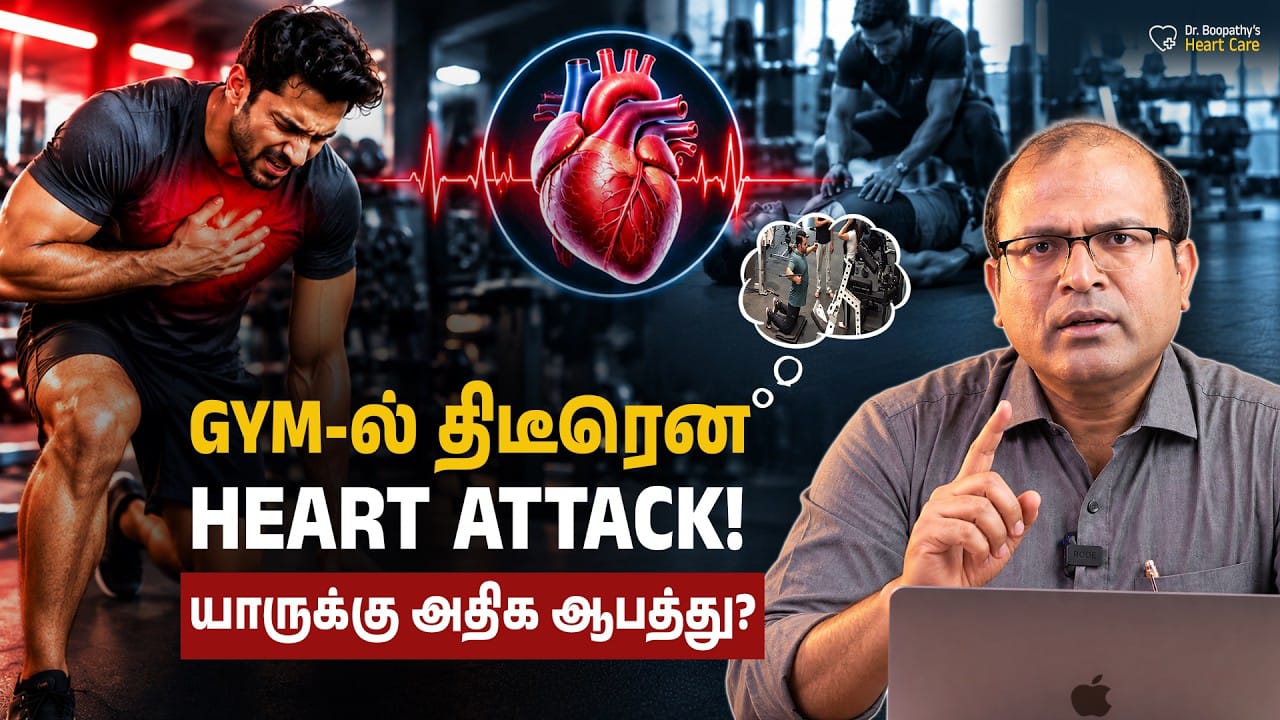
A video of someone suddenly collapsing while exercising can be frightening.
It often leads to an immediate question:
“If exercise is supposed to be good for the heart, how can someone collapse during a workout?”
The answer is important.
Exercise is good for the heart.
Regular physical activity is one of the most effective things we can do for long-term cardiovascular health. It can improve fitness, blood pressure, blood-sugar control, weight, muscle strength and overall wellbeing.
But exercise should also be appropriate for your current health, fitness level and training history.
A person who has been inactive for years should not suddenly decide to run a marathon.
Someone who has never lifted weights should not walk into a gym and attempt a very heavy lift on the first day.
And a person experiencing chest discomfort or unusual breathlessness should not try to “push through” the symptoms.
In this article, Dr. S. Nagendra Boopathy, Professor of Cardiology and Senior Consultant Interventional Cardiologist in Chennai, explains how to exercise safely, who should speak to a doctor before starting, what warning symptoms should never be ignored, and why gradual progression is more important than competing with other people.
Is Exercise Good or Bad for the Heart?
For the vast majority of people:
Exercise is extremely beneficial.
Regular physical activity can help improve:
- Cardiovascular fitness
- Blood-pressure control
- Blood-sugar control
- Cholesterol profile
- Weight management
- Muscle strength
- Bone health
- Sleep
- Stress
- Mental wellbeing
Physical inactivity itself is an important cardiovascular risk factor.
The message should therefore not be:
“Exercise is dangerous.”
The correct message is:
Exercise is beneficial—but the type and intensity should match the individual.
Why Do We Occasionally Hear About People Collapsing During Exercise?
When a person suddenly develops a serious cardiac event during exercise, the exercise itself is not necessarily the original cause.
In some cases, the individual may already have an underlying condition such as:
- Significant coronary artery disease
- An abnormal heart rhythm
- Structural heart disease
- Cardiomyopathy
- Severe valve disease
- An inherited electrical disorder
that had not previously been diagnosed.
Vigorous physical exertion places greater demand on the cardiovascular system.
In a susceptible individual, that increased demand may sometimes reveal an underlying problem.
However, such events are uncommon compared with the enormous health benefits regular exercise provides.
Does Everyone Need a Heart Check-Up Before Exercising?
No.
A healthy person without symptoms does not automatically need extensive cardiac testing before beginning normal, moderate physical activity.
If you are currently inactive, a sensible approach is to:
Start gently and build gradually.
However, there are several situations where speaking to a doctor before beginning an exercise programme is particularly important.
Who Should Speak to a Doctor Before Starting Exercise?
Medical evaluation is advisable if you already have known heart disease.
For example, if you have:
- Previous heart attack
- Coronary angioplasty or stent
- Previous bypass surgery
- Heart failure
- Significant valve disease
- Cardiomyopathy
- Known rhythm disorder
- Previous cardiac arrest
your exercise plan should be discussed with your cardiologist.
This does not mean you should avoid exercise.
In fact, exercise and cardiac rehabilitation can be extremely important.
The difference is that your programme needs to be appropriate for your condition.
What If You Have Lung Disease?
Patients with significant lung conditions may also require personalised exercise guidance.
For example:
- Severe COPD
- Pulmonary hypertension
- Significant lung disease causing breathlessness
may affect how much exercise is safe and comfortable.
Your doctor may recommend supervised rehabilitation or specific intensity limits.
Symptoms Are More Important Than Age Alone
Even if you have never been diagnosed with heart disease, certain symptoms deserve attention before you begin vigorous exercise.
These include:
- Chest pain
- Chest pressure
- Chest tightness
- Unexplained breathlessness
- Palpitations
- Unusual sweating
- Dizziness
- Fainting
- Severe unexplained fatigue
- Jaw discomfort during activity
If these symptoms occur during walking or exertion and improve when you stop, they should be evaluated.
Do not simply assume:
“I am unfit, so this is normal.”
Breathlessness During Exercise: What Is Normal?
Breathing faster while exercising is normal.
If you jog, cycle or walk briskly, your muscles require more oxygen, so your heart and lungs work harder.
But there is a difference between expected exercise breathlessness and unusual breathlessness.
Be concerned when:
- Very little activity makes you breathless
- Your exercise capacity has suddenly fallen
- Breathlessness is significantly worse than before
- It is accompanied by chest pressure
- You become dizzy or faint
A sudden change from your usual capacity is particularly important.
Chest Pain During Exercise Should Never Be Ignored
If you develop:
- Chest pressure
- Tightness
- Heaviness
- Burning
- Discomfort spreading to the arm or jaw
during exercise, stop.
Do not think:
“I will finish another kilometre and see.”
Do not attempt to prove that you can tolerate the discomfort.
New exertional chest symptoms require medical assessment.
What If Breathlessness Is Worse While Lying Down?
Breathlessness that becomes worse when lying flat and improves when sitting upright can sometimes occur with heart failure or other significant medical conditions.
Likewise, symptoms such as:
- Leg swelling
- Abdominal swelling
- Rapid unexplained weight gain
- Breathlessness at night
deserve medical evaluation before attempting strenuous exercise.
What If You Want to Run a Marathon?
Preparing for a marathon is very different from beginning a daily walking programme.
A 42-kilometre marathon represents prolonged vigorous exercise.
If you are:
- Previously sedentary
- Middle-aged or older
- Carrying cardiovascular risk factors
- Planning your first endurance event
it is sensible to discuss your training plan with an appropriate medical professional.
Most importantly:
Do not go from inactivity to marathon training overnight.
Build cardiovascular capacity gradually.
What About Heavy Weightlifting?
The same principle applies to resistance exercise.
Strength training is beneficial.
But someone who has never trained with weights should not immediately attempt extremely heavy loads.
Heavy lifting can cause significant temporary increases in:
- Blood pressure
- Heart rate
- Cardiovascular workload
especially when people hold their breath while straining.
Begin with manageable resistance, learn proper technique and increase the load gradually.
Think of Exercise Like Learning to Walk
A child does not stand up on the first day of life and start running.
Development happens gradually:
- Rolling
- Sitting
- Standing
- Walking with support
- Walking independently
- Running
Exercise should develop in the same way.
First build consistency.
Then duration.
Then intensity.
Then performance.
Trying to skip these stages increases the risk of injury, exhaustion and unnecessary cardiovascular stress.
The First Rule: Warm Up
One of the common mistakes people make is beginning a workout at full intensity.
For example:
You enter the gym and immediately start lifting heavy weights.
Or:
You step outside and immediately begin running quickly.
A better approach is to allow your body to prepare.
What Does a Warm-Up Do?
During a gradual warm-up:
- Heart rate rises progressively
- Blood flow to the muscles increases
- Body temperature rises
- Muscles and joints prepare for activity
- The cardiovascular system adapts to increasing demand
A warm-up may include:
- Gentle walking
- Easy cycling
- Dynamic movements
- Light stretching
- Low-intensity versions of the exercise you plan to perform
For many people, approximately 5–10 minutes of gradual activity can be useful before the main workout.
Do Not Compete With Your Walking Partner
This is one of the simplest but most important pieces of exercise advice.
Suppose you start walking with a friend.
Your friend comfortably walks at a fast pace.
You become breathless trying to keep up.
Do not think:
“He can do it, so I should also be able to.”
Your:
- Age
- Fitness
- Heart rate
- Medical history
- Muscle strength
- Training experience
may be completely different.
Your exercise programme should be based on your body—not somebody else’s speed.
The Person You Should Compete With Is Yourself
Rather than trying to match your friend, compare yourself with your previous performance.
For example:
Week 1
You comfortably walk 15 minutes.
Week 2
You comfortably walk 20 minutes.
Week 3
You walk 25 minutes.
That is meaningful progress.
You do not need to become the fastest person in your walking group.
Start Small If You Have Been Inactive
If you have done very little exercise for months or years, do not begin with an extreme programme.
Start with manageable activity.
For example:
- Short walks
- Light cycling
- Basic resistance exercises
Gradually increase:
- Frequency
- Duration
- Intensity
Avoid increasing all three dramatically at the same time.
Should You Count Steps?
Step counting can be motivating, but it should not become an obsession.
If you currently walk only around 2,000–3,000 steps per day, trying to jump immediately to 10,000 may create unnecessary fatigue or joint pain.
Instead, gradually increase your normal activity level.
For example:
Current baseline:
3,000 steps
Next goal:
4,000–5,000 steps
Then progress further as your body adapts.
The exact target varies between individuals.
Is 10,000 Steps Mandatory?
No.
Ten thousand steps is not a magical number required for cardiovascular health.
Health benefits begin well below that level, especially for someone who was previously sedentary.
For many people, gradually working toward approximately 7,000–8,000 daily steps may be a useful practical goal.
Others may appropriately do more or less depending on:
- Age
- Health
- Fitness
- Mobility
Consistency matters more than chasing one number.
What Is the “Talk Test”?
An easy way to estimate moderate exercise intensity is the talk test.
During moderate exercise, you should usually be able to talk in sentences, although you may be breathing harder.
If you are so breathless that you cannot speak comfortably, your intensity may be too high—particularly if you are a beginner.
This is only a general guide and does not replace personalised exercise advice in people with heart disease.
Cardio Exercise vs Strength Training: Which Is Better?
Patients frequently ask:
“Should I walk and run, or should I lift weights?”
The answer for most people is:
Both have different benefits.
A balanced programme usually includes both aerobic activity and resistance exercise.
What Is Cardio Exercise?
Cardiovascular or aerobic activities include:
- Walking
- Jogging
- Cycling
- Swimming
- Dancing
- Elliptical exercise
These activities generally:
- Raise your heart rate
- Improve cardiovascular endurance
- Improve exercise tolerance
- Support blood-pressure control
- Support metabolic health
What Is Resistance Exercise?
Resistance training challenges muscles using:
- Body weight
- Resistance bands
- Dumbbells
- Gym machines
- Free weights
It helps maintain:
- Muscle strength
- Muscle mass
- Bone strength
- Functional independence
Both forms of exercise serve different purposes.
Why Muscle Strength Becomes More Important With Age
As people become older, they gradually tend to lose muscle mass and strength.
Significant age-related muscle loss is known as sarcopenia.
Loss of muscle can contribute to:
- Weakness
- Poor balance
- Reduced mobility
- Difficulty getting up from a chair
- Greater risk of falls
- Loss of independence
Therefore, exercise should not focus only on burning calories.
Preserving muscle is also an important long-term health goal.
How Often Should Strength Training Be Done?
For most healthy adults, including muscle-strengthening activity on at least two days per week is a useful general target.
This does not mean performing extremely heavy bodybuilding workouts.
Exercises can include:
- Squats appropriate to ability
- Resistance bands
- Light dumbbells
- Machines
- Push and pull exercises
- Functional strengthening
The goal is to gradually challenge major muscle groups.
How Much Cardio Should Adults Aim For?
A useful general public-health goal is regular moderate aerobic activity spread across the week.
For many adults, this works out to approximately:
150 minutes or more of moderate aerobic activity per week
with additional benefits possible at higher levels when appropriate.
You do not have to complete it in one session.
It can be distributed across the week.
A Simple Weekly Exercise Pattern
For a healthy adult, a practical routine might look like:
Monday
Brisk walking
Tuesday
Walking + light resistance training
Wednesday
Cycling or swimming
Thursday
Walking
Friday
Resistance training
Saturday
Longer comfortable walk or another aerobic activity
Sunday
Rest, mobility or gentle activity
There is no need for every day to look identical.
Variety can make exercise easier to maintain.
Why Mixed Exercise Is Often Better
Doing only one type of exercise can become monotonous.
Combining activities can improve:
- Cardiovascular fitness
- Muscle strength
- Flexibility
- Enjoyment
- Long-term adherence
For example:
Walking + resistance exercise
may provide broader benefits than walking alone.
Why Cool-Down Matters
Stopping abruptly after intense exercise can make some people feel:
- Light-headed
- Dizzy
- Uncomfortable
A gradual cool-down allows the cardiovascular system to adjust.
After exercise:
- Slow your walking pace
- Cycle gently
- Allow your breathing to settle
- Stretch comfortably
A few minutes of gentle movement is usually sufficient.
Do You Need to Stretch?
Stretching can help maintain:
- Mobility
- Flexibility
- Comfort
It is particularly useful after the body is warm.
Avoid aggressively forcing a painful joint or muscle.
Stretching should feel like tension—not sharp pain.
Hydration During Exercise
Fluid is important, particularly when exercising:
- For long periods
- In hot weather
- Outdoors
- While sweating heavily
Drink appropriate fluids before, during and after exercise according to thirst, duration and conditions.
However:
More water is not always better.
Excessive water intake can also disturb electrolyte balance.
Patients with:
- Heart failure
- Kidney disease
- Fluid restrictions
should follow their doctor’s individual advice rather than general hydration recommendations.
What About Electrolytes?
During prolonged or very intense exercise with heavy sweating, the body loses:
- Water
- Sodium
- Other electrolytes
For normal moderate workouts, most people can replace what they need through ordinary food and fluids.
Sports drinks are not necessary after every short walk or gym session.
Long endurance events are different and may require a more structured hydration and electrolyte plan.
Can Dehydration Cause Palpitations?
Significant dehydration can affect:
- Blood pressure
- Heart rate
- Electrolyte levels
and may contribute to palpitations in susceptible people.
However, recurrent palpitations during exercise should not simply be blamed on dehydration.
They should be assessed when persistent, severe or associated with:
- Dizziness
- Chest pain
- Breathlessness
- Fainting
What Symptoms Mean You Should Stop Exercising?
Stop exercising and seek medical advice if you develop:
- Chest pain
- Chest pressure
- Significant unexplained breathlessness
- Severe dizziness
- Near-fainting
- Fainting
- New severe palpitations
- Unusual cold sweating
- Sudden weakness
Do not “push through” cardiac warning symptoms.
Exercise is intended to improve health—not test how much discomfort you can tolerate.
Do You Need an ECG Before Joining a Gym?
Not every healthy young person needs an ECG before joining a gym.
However, medical assessment may be useful if you:
- Have symptoms
- Have known cardiovascular disease
- Have a strong family history of premature heart disease or sudden cardiac death
- Have important cardiovascular risk factors
- Plan very vigorous competitive or endurance exercise after prolonged inactivity
Your doctor can decide whether testing is needed.
Do You Need a Treadmill Test Before Exercise?
Not everyone needs a treadmill test.
A treadmill stress test may be appropriate in selected people based on:
- Symptoms
- Cardiovascular risk
- Existing heart disease
- Planned exercise intensity
Screening tests should be chosen for a reason—not simply ordered for everyone.
What About Exercise After Angioplasty or Stent Placement?
Exercise is generally an important part of recovery after coronary angioplasty.
But intensity and timing depend on:
- Whether you had a heart attack
- Heart pumping function
- Remaining coronary disease
- Wrist or groin access-site recovery
- Other medical conditions
Cardiac rehabilitation can provide a structured way to return to activity safely.
Can You Lift Weights After a Stent?
Many patients can eventually perform resistance training.
However, immediately returning to very heavy lifting is not appropriate.
Begin only after clearance and progress gradually.
Avoid holding your breath and straining excessively during heavy lifts.
What About Exercise After Bypass Surgery?
Exercise is an important part of recovery after bypass surgery.
Initially, however, activity may need to respect:
- Chest-bone healing
- Surgical wounds
- Cardiovascular recovery
A cardiac rehabilitation programme can be extremely useful.
Can Someone With Heart Failure Exercise?
Many stable patients with heart failure can benefit from appropriately prescribed exercise.
But the programme should be individualised.
Do not begin strenuous exercise when experiencing:
- Worsening breathlessness
- Increasing leg swelling
- Rapid weight gain
- Significant weakness
Speak to your cardiologist first.
Exercise Is Not a Competition
Perhaps the most important message is this:
You are not exercising to win a medal every morning.
Most people exercise because they want to:
- Remain healthy
- Improve heart fitness
- Build muscle
- Control weight
- Manage diabetes
- Maintain independence
There is no benefit in pushing the body far beyond its current ability simply to keep up with somebody else.
Frequently Asked Questions About Exercise and Heart Safety
1. Is exercise dangerous for the heart?
For most people, regular exercise is beneficial.
Risk becomes more relevant with undiagnosed disease, symptoms or sudden extreme exertion beyond one’s conditioning.
2. Can exercise cause a heart attack?
A heart attack is usually caused by underlying coronary artery disease.
Very vigorous exertion can sometimes trigger an event in a susceptible individual, but regular physical activity overall reduces cardiovascular risk.
3. Can someone suddenly collapse while exercising without previous symptoms?
It is possible but uncommon.
Certain cardiac conditions may remain silent until they produce a serious rhythm disturbance or other event.
4. Should everyone undergo heart tests before joining a gym?
No.
Healthy, asymptomatic people beginning moderate activity generally do not require extensive cardiac testing.
5. Who should see a cardiologist before exercising?
People with:
- Known heart disease
- Previous angioplasty or bypass
- Heart failure
- Significant valve disease
- Concerning symptoms
- Plans for unusually intense exercise after inactivity
should consider medical assessment.
6. Is chest pain while exercising normal?
No.
New chest pressure, tightness or heaviness during activity deserves medical assessment.
7. Is breathlessness during exercise normal?
Some breathlessness is expected.
Breathlessness that is excessive, sudden or disproportionate to the activity needs evaluation.
8. Are palpitations during exercise dangerous?
Occasional awareness of a fast heartbeat can occur normally during exercise.
Irregular, severe or persistent palpitations—especially with dizziness or fainting—should be evaluated.
9. Can I exercise if I have high blood pressure?
Usually yes, and regular exercise can help blood-pressure control.
Severely uncontrolled blood pressure should be evaluated before vigorous exercise.
10. Can diabetic patients exercise?
Yes.
Exercise is particularly beneficial for diabetes.
Patients taking glucose-lowering medication may need guidance regarding:
- Meal timing
- Glucose monitoring
- Hypoglycaemia
11. Can I exercise if my cholesterol is high?
Yes.
Regular activity is an important part of cardiovascular prevention.
Exercise should accompany—not replace—any medication prescribed for high cardiovascular risk.
12. Is walking enough for heart health?
Walking is an excellent form of aerobic activity.
For broader health benefits, adding appropriate strength training can also help preserve muscle.
13. Do I need exactly 10,000 steps?
No.
Ten thousand steps is not a compulsory medical target.
Increasing activity from your current baseline is more important.
14. Are 7,000–8,000 steps enough?
For many adults, this can represent a good level of daily activity.
The ideal amount varies according to health and fitness.
15. Which is better: gym or walking?
They provide different benefits.
Walking improves aerobic fitness.
Resistance exercise improves muscle strength.
Combining them is often ideal.
16. Should I lift heavy weights for heart health?
You do not need extremely heavy weights.
Progressive moderate resistance training can provide substantial benefits.
17. How heavy should a beginner lift?
There is no universal kilogram target.
Start with a weight you can control with proper form and gradually increase resistance.
18. Why is warming up important?
A warm-up allows the heart, blood vessels, muscles and joints to gradually adapt to increasing exercise demand.
19. How long should I warm up?
For many people, approximately 5–10 minutes of gradual activity is reasonable.
Longer warm-ups may be appropriate before intense exercise.
20. Do I need a cool-down?
Yes, particularly after moderate or vigorous activity.
Gradually reducing intensity helps circulation return toward resting levels.
21. Should I stretch before or after exercise?
Gentle dynamic movement can be useful before exercise, while comfortable stretching may be incorporated afterward.
Avoid forceful stretching of cold muscles.
22. Is sweating during exercise dangerous?
Sweating is a normal cooling response.
New unexplained cold sweating together with chest discomfort, breathlessness or weakness is different and can be a warning sign.
23. Can dehydration affect the heart?
Significant dehydration can affect heart rate, blood pressure and electrolyte levels.
Maintain appropriate hydration, particularly during prolonged exercise or hot weather.
24. Do I need an electrolyte drink after exercising?
Usually not after a short or moderate workout.
Water and normal meals are sufficient for many people.
Long-duration intense exercise with heavy sweating may require additional electrolyte planning.
25. Can I exercise every day?
Many people can perform some form of activity daily.
However, recovery is important, particularly after strenuous strength training.
Varying intensity throughout the week can help.
26. Should I exercise when I am sick?
Light activity may be possible with very minor illness, but strenuous exercise should generally be avoided when you have:
- Fever
- Significant infection
- Severe weakness
- Chest symptoms
Allow adequate recovery.
27. Can I exercise immediately after a heavy meal?
It is generally more comfortable to avoid intense exercise immediately after a large meal.
Allow sufficient time for digestion.
28. Is morning exercise better than evening exercise?
Both can be beneficial.
The best time is the time you can follow safely and consistently.
Avoid extreme environmental conditions and choose a schedule that suits your health.
29. What should I do if I feel chest pressure halfway through my walk?
Stop exercising.
If the symptom is new, persistent, severe or accompanied by sweating or breathlessness, seek urgent medical attention.
Do not continue simply to complete your step target.
30. What is the most important rule for safe exercise?
Start at your level and progress gradually.
Warm up.
Do not compete with others.
Combine aerobic and strength exercise.
Listen to warning symptoms.
Cool down.
Stay appropriately hydrated.
Exercise is intended to make your body healthier—not to prove how hard you can push it.
A Simple Exercise Safety Formula
For most people, a good exercise habit can be remembered in six steps:
1. Know your health
If you have heart disease or concerning symptoms, speak to your doctor.
2. Warm up
Give your cardiovascular system time to prepare.
3. Start gently
Do not go from zero activity to extreme exercise.
4. Progress gradually
Increase duration and intensity over weeks—not overnight.
5. Mix cardio and strength
Train both your heart and your muscles.
6. Cool down and recover
Hydration, sleep and recovery are part of exercise too.
Final Takeaway
Exercise is not the enemy of the heart.
Physical inactivity is a much bigger long-term problem for most people.
But exercise should be performed intelligently.
A previously inactive person does not need to suddenly run 5 kilometres.
A beginner does not need to lift 30 kilograms on the first day.
And you do not need to chase the person walking beside you.
Build your fitness gradually.
If you have known heart disease, significant lung disease or warning symptoms such as chest discomfort, unusual breathlessness, fainting or exercise-related palpitations, speak with your doctor before progressing to strenuous workouts.
For everyone else, the message is simple:
Start moving.
Start at your level.
Warm up.
Build slowly.
Strengthen your muscles as well as your heart.
Never ignore warning symptoms.
The purpose of exercise is not to prove yourself to somebody else.
It is to help you stay healthier, stronger and more independent for years to come.
Consult Dr. S. Nagendra Boopathy
Dr. S. Nagendra Boopathy
MBBS (MMC), MD (PGIMER), DM (Cardiology – AIIMS), FACC, FSCAI
Professor of Cardiology
Senior Consultant Interventional Cardiologist
Complex Coronary & Structural Heart Interventions
Dr. Boopathy Heart Care
6th Cross Street
Director’s Colony
Kodambakkam
Chennai – 600024
Appointment / Contact
+91 87544 98680
Sri Ramachandra Medical Centre
No. 1, Ramachandra Nagar
Porur
Chennai – 600116
Tamil Nadu
Hospital Enquiries
044-4592 8844 / 044-4592 8855
044-4001 2323
Emergency Services
044-400 12345
Medical Disclaimer: This article is intended for general educational purposes only. Exercise recommendations should be individualised according to age, fitness, symptoms, medical history and cardiovascular condition. People with known heart disease or concerning exercise-related symptoms should consult their doctor before beginning vigorous exercise. Seek urgent medical attention for severe chest discomfort, fainting, significant breathlessness or other symptoms suggestive of a cardiac emergency.