
Quick answer
Do not stop stent medicines on your own. Whether you can pause one depends on why and when your stent was placed, and on the bleeding risk of your procedure. Many dental treatments can go ahead without stopping them. Ask your cardiologist before making any change.
Your tooth needs to come out, or a surgeon wants to operate next month. Then someone says, “Stop your blood thinners first.” If you have a coronary stent, pause before you follow that advice. Do not stop the medicine yourself. Call the cardiologist who manages your stent.
The answer depends on details a quick instruction can miss: why the stent was placed, when it was placed, which medicines you take, and how much bleeding the procedure may cause.
Why stent medicines matter
A stent is a small mesh tube that holds a narrowed artery open. Until the artery heals around it, the stent can attract platelets, the blood cells that form clots. A clot inside a stent is called stent thrombosis. It can block the artery suddenly and cause a heart attack.
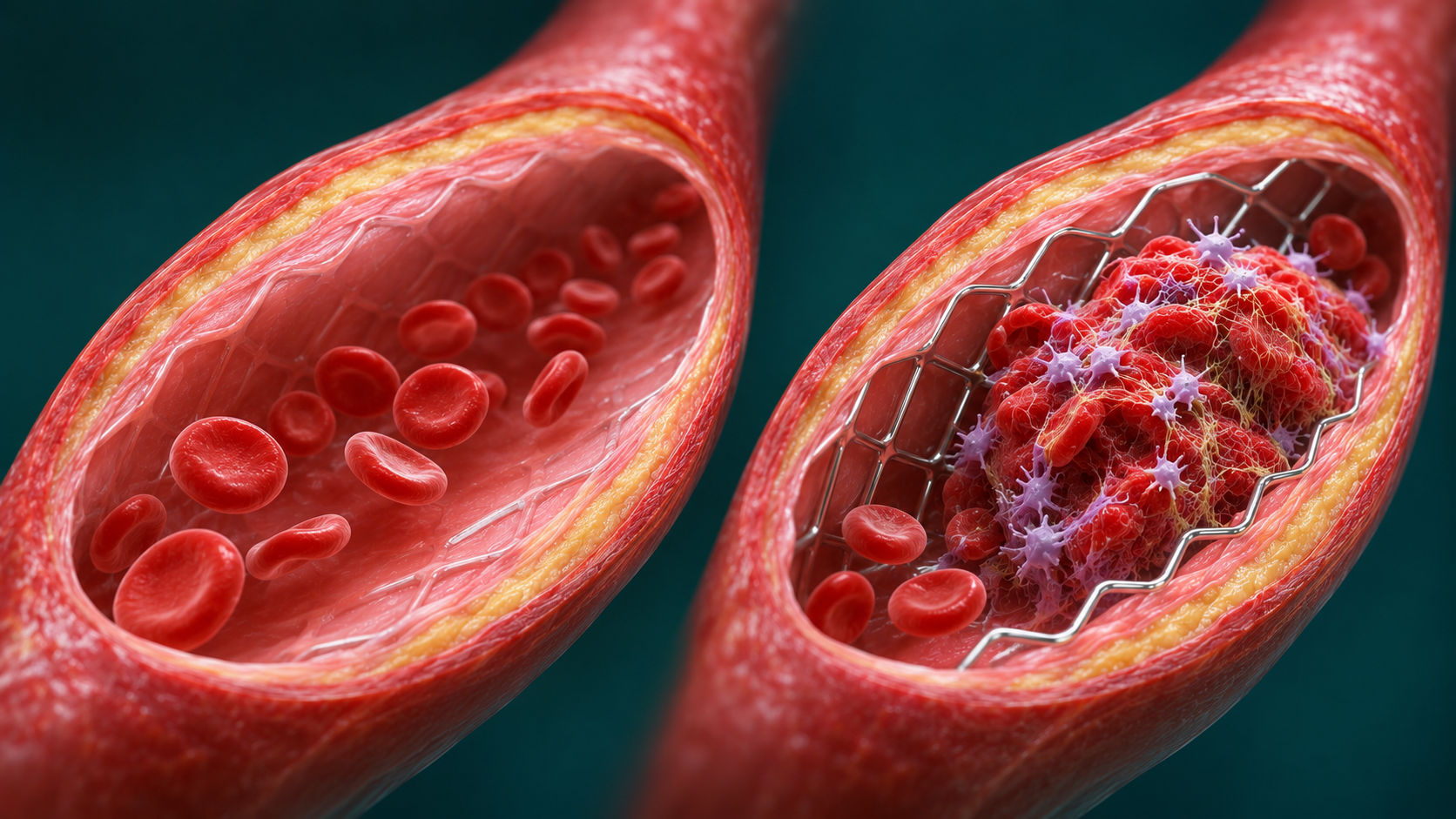
Most people first take two antiplatelet medicines, known as dual antiplatelet therapy or DAPT. This usually means aspirin plus a second medicine such as clopidogrel, ticagrelor or prasugrel. Patients often call these blood thinners, although they work on platelets rather than literally thinning the blood.
How long will you need two medicines?
There is no single duration for everyone. The reason for the stent is one of the biggest factors.
- After a heart attack or unstable angina: US guidance supports DAPT for at least 12 months for patients who are not at high bleeding risk.
- For stable coronary disease: a guideline summary describes DAPT for 6 months for most patients, followed by one antiplatelet medicine.
- If your bleeding risk is high: your cardiologist may use a shorter or adjusted plan.
Your discharge summary is the best starting point. Keep it, and carry your stent details with you.
Planned surgery after a stent
The safest timing depends on the stent type, why it was placed, and how urgent the operation is. A summary of the 2024 AHA/ACC guideline gives these general points for surgery:
| Situation | General guidance |
|---|---|
| First 30 days after PCI | Elective surgery should not go ahead |
| Drug-eluting stent for stable disease | Ideally delay elective surgery for 6 months |
| Stent after a heart attack or unstable angina | Ideally delay elective surgery for 12 months |
| Time-sensitive surgery, such as some cancer surgery | The team may consider surgery from 3 months after weighing the risks |
These are guideline principles, not personal instructions. An urgent operation may need a different plan. The risk of stent thrombosis around surgery is highest in the first 4 to 6 weeks and falls over time.
What usually happens to each medicine?
When interruption is necessary, aspirin should be continued if possible, and the second medicine should be restarted as soon as it is safe. Routine intravenous bridging is not recommended, although it may be considered for selected high-risk patients. The stop time differs by medicine, so your own team must set the date.
What about dental work?
Stopping stent medicines is often not needed for dental treatment. Scottish dental guidance says to treat without interrupting single or dual antiplatelet medicines. It notes that bleeding may last longer, especially on two medicines, and that reported complications are uncommon and usually controlled with local measures.
Your dentist may use stitches or a dressing in the socket. If you have a recent stent and the procedure can wait, ask whether it should be delayed. Let your dentist and cardiologist speak to each other if there is any disagreement.
If you are bleeding or bruising
Minor bruising can happen on antiplatelet medicines. Do not respond by skipping doses. Tell your doctor, because your treatment may need review.
Get emergency care for vomiting blood, black stools, heavy bleeding that does not stop, a head injury, sudden weakness, or chest pain.
Questions to ask before any procedure
- Why was my stent placed: a heart attack or stable disease?
- When was it placed, and which medicines am I on?
- Is it safe to delay this procedure?
- How much bleeding risk does it carry?
- Which medicine, if any, should stop, and on what exact date?
- Who will tell me when to restart it?
Frequently asked questions
Can my surgeon or dentist decide alone?
Your surgeon or dentist knows the bleeding risk of the procedure, while your cardiologist knows your stent and your clot risk. For surgery, guidance favours a shared decision that includes the surgeon, anaesthetist and cardiologist, along with you and your family. If you receive different advice, ask them to speak directly before you change anything.
I missed one dose. What should I do?
Check with your doctor or pharmacist as soon as you notice. Do not take extra doses unless you are told to. If you miss doses often, tell your cardiologist, because a simple reminder or routine can help you stay protected.
Can I switch to a cheaper brand?
Ask your doctor or pharmacist first. Check that the new product contains the same medicine at the same strength. Never replace a prescribed antiplatelet medicine with a different one on your own, even if it looks similar.
Will I need aspirin for life?
Many people need long-term antiplatelet treatment after a stent, but the plan varies. After the two-medicine period ends, your cardiologist will usually tell you which single medicine to continue. Ask for this in writing and bring it to future appointments.
What should I tell every doctor and dentist?
Tell them that you have a coronary stent, when it was placed, and every medicine you take. Keep your discharge summary or a photo of your stent details on your phone. This helps them make safer decisions, particularly in an emergency.
Do herbal products affect bleeding?
Some may. Tell your doctor and pharmacist about everything you take, including ayurvedic, herbal and over-the-counter products. Check with them before you start something new.
Are bruises a reason to stop?
No. Minor bruising can happen on these medicines, but it is not a reason to skip doses. Mention it to your doctor so they can review your treatment. Seek emergency care for heavy bleeding, black stools, vomiting blood or a head injury.
Practical takeaway
Never stop stent medicines on your own, even for a short time. If someone asks you to stop, contact your cardiologist first and share the planned procedure and date. Call emergency services for chest pain, severe breathlessness or heavy bleeding.
You can also read what patients should know before coronary angioplasty.