Quick answer
A calcium score helps estimate future risk in selected people without symptoms. A CT angiogram looks at the arteries in suitable people with stable chest pain. An invasive angiogram is used when risk is higher or treatment may be needed. New chest pain needs urgent care, not a screening test.
In this article
- Three tests at a glance
- Calcium score: useful for risk, not for chest pain emergencies
- Why “zero” is not the same as “no disease”
- CT coronary angiogram: seeing the arteries without a catheter
- Invasive angiogram: when treatment may be needed
- Which test might fit your situation?
- Frequently asked questions
- Practical takeaway
“My friend had a calcium score. Should I get one too?” It is a reasonable question, but these three tests answer different questions. A calcium score looks for calcified plaque. A CT angiogram shows the arteries. A regular angiogram also shows the arteries and allows treatment during the same procedure if a blockage needs it.
The right test depends mostly on one thing: do you have symptoms?
If you have chest pain now, do not book a screening test. Seek emergency care.
Three tests at a glance
| Test | Main question | Contrast dye | Often suited to |
|---|---|---|---|
| Calcium score | Is calcified plaque present? | No | Selected people without symptoms, when a statin decision is uncertain |
| CT coronary angiogram | Is there plaque or narrowing? | Yes | Selected people with stable chest pain and no known coronary disease |
| Invasive angiogram | Is there a blockage that needs treatment? | Yes | Higher-risk symptoms, unstable disease, or when treatment may be needed |
Calcium score: useful for risk, not for chest pain emergencies
A calcium score uses CT to measure calcified build-up in the coronary arteries. A higher score generally means more atherosclerosis and greater risk.
US cholesterol guidance uses it in a specific setting: adults at intermediate or selected borderline risk when the statin decision remains uncertain.
| Result | How the guideline uses it |
|---|---|
| 0 | Reasonable to withhold a statin and reassess in 5 to 10 years, if higher-risk conditions are absent |
| 1 to 99 | Reasonable to start a statin at age 55 or older |
| 100 or more, or 75th percentile or higher | Reasonable to start a statin |
A zero score does not cancel other risks. The guideline makes exceptions for smoking, diabetes and strong family history of early heart disease.
The test also has limits. A US task force found insufficient evidence that adding it to traditional risk assessment improves patient-oriented outcomes.
Why “zero” is not the same as “no disease”
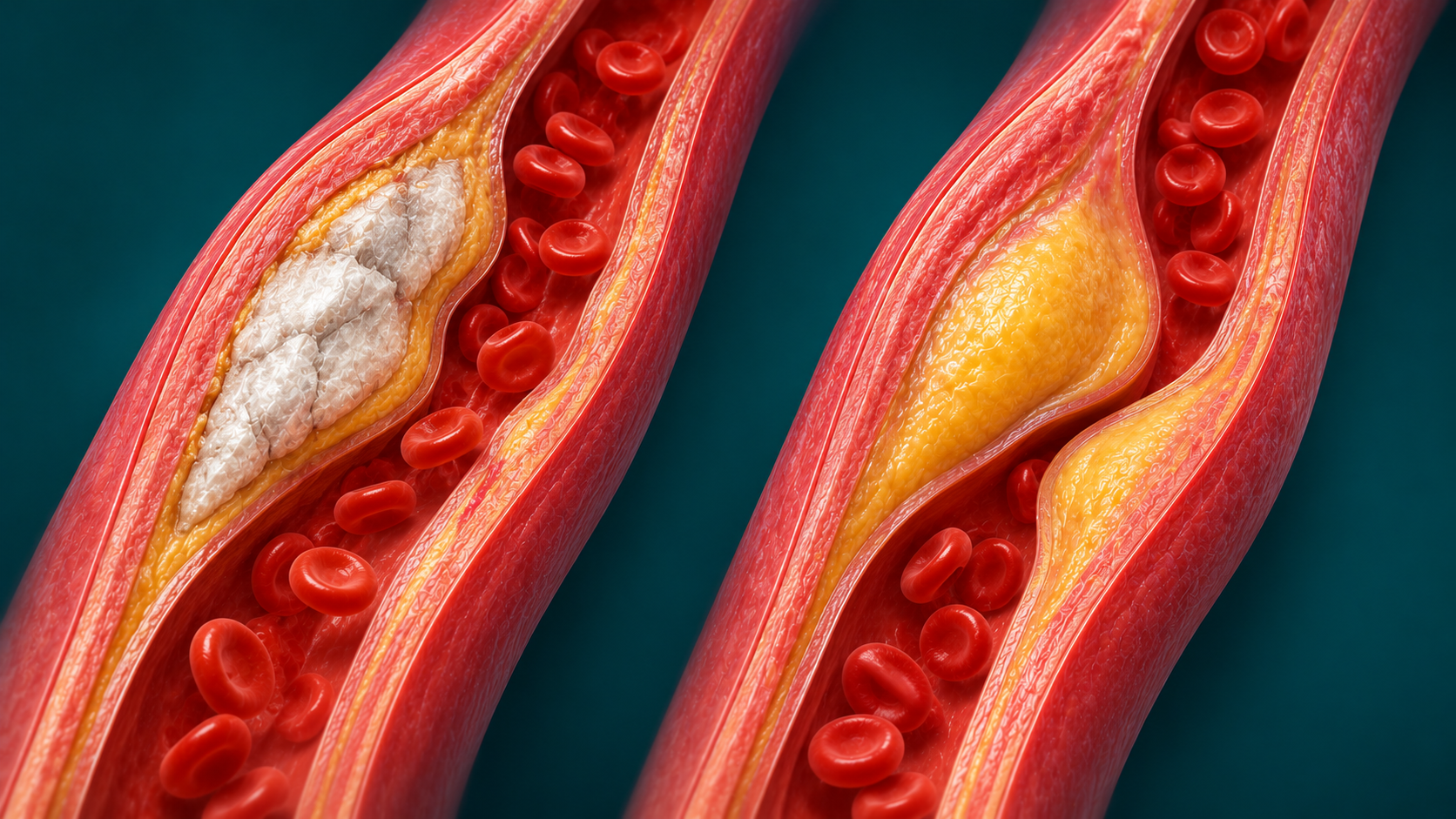
A calcium score sees calcium, not every type of plaque. In a study of patients with suspected stable angina who had a zero score and CT angiography, 8.4% had non-calcified disease below 50% narrowing and 1.9% had narrowing of 50% or more.
A zero score is still reassuring overall. A meta-analysis linked it to low rates of cardiac events in low-to-intermediate risk patients with chest pain. However, if you have symptoms, your doctor should not rely on the number alone.
CT coronary angiogram: seeing the arteries without a catheter
A CT angiogram uses contrast dye to show the artery walls and the channel inside. It can detect plaque that has not calcified.
The 2021 US chest pain guideline made CT angiography a first-line option for suitable patients with chest pain and no known coronary disease. In the DISCHARGE trial, 3,561 patients with stable chest pain and an intermediate likelihood of disease were assigned to CT or invasive angiography first. Major cardiac events were similar, while major procedure-related complications occurred in 0.5% with CT and 1.9% with invasive angiography.
CT is not perfect. Heavy calcium can make a CT result inconclusive. It also uses radiation and contrast, so your doctor will check whether it is appropriate, especially if you have kidney disease or a contrast allergy.
Invasive angiogram: when treatment may be needed
During an invasive angiogram, a thin catheter is passed to the heart arteries, usually through the wrist or groin, and dye is injected. If a significant blockage is found and treatment is appropriate, angioplasty may be possible during the same procedure.
Guidance supports invasive angiography for high-risk acute chest pain. It may also be used after high-risk CT findings or persistent symptoms with documented ischaemia despite treatment.
Which test might fit your situation?
- No symptoms, unsure about starting a statin: ask whether a calcium score would change your decision.
- Stable chest discomfort, no known coronary disease: your doctor may consider CT angiography or a stress test, depending on risk and availability.
- Severe, new or worsening chest pain: go to the emergency department.
- Known stents or prior bypass: testing is more individual, so ask your cardiologist.
Frequently asked questions
Should everyone get a calcium score?
No. It is most helpful when the result would change a treatment decision, such as whether to start a statin. If you already have known coronary disease, or your treatment is already clear, the test may add little.
Can a normal ECG replace these tests?
No. An ECG checks the heart’s electrical activity at that moment. It does not map plaque in the arteries, so a normal ECG cannot rule out coronary disease. Learn more about heart attacks with a normal ECG.
If I am on a statin, do I need a calcium score?
It may not change your treatment. Ask your cardiologist whether the result would alter your plan before you book the test. Do not stop a prescribed statin because of a low score without speaking to your doctor.
Does a high calcium score mean I need a stent?
Not by itself. A high score shows more calcified plaque and higher risk, but it does not show whether an artery is severely narrowed. Your cardiologist will consider your symptoms and may recommend other tests or preventive treatment.
Will a CT angiogram always avoid an invasive angiogram?
No. CT may show findings that need further testing or treatment. It can also be inconclusive when there is heavy calcium. Even so, it can help some patients avoid a catheter test.
Which test is best for me?
There is no single best test for everyone. The right choice depends on your symptoms, risk factors, kidney function, previous heart disease and local availability. Ask your cardiologist what question the test will answer and how the result will change your care.
Practical takeaway
Start with your symptoms and overall risk, not with the most advanced scan. A calcium score helps estimate future risk, a CT angiogram evaluates the arteries, and an invasive angiogram can also lead to treatment. New chest pain or breathlessness needs prompt medical attention, whatever an earlier test showed.