For patients diagnosed with severe aortic stenosis, choosing the right treatment can be an important and sometimes overwhelming decision.
Many families searching online for the Best Cardiologist for TAVI in Chennai are trying to understand:
- What TAVI means
- Whether surgery can be avoided
- Whether an elderly patient is suitable
- How risky the procedure is
- How quickly recovery happens
- How the right cardiologist and heart team are chosen
TAVI, also called Transcatheter Aortic Valve Implantation, is a minimally invasive procedure used to replace a severely diseased aortic valve in selected patients.
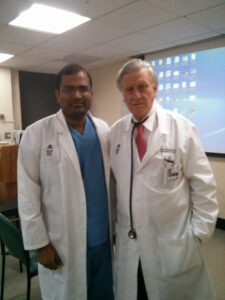
Dr. S. Nagendra Boopathy, Senior Consultant Interventional Cardiologist in Chennai, is involved in advanced structural heart interventions including evaluation and treatment of patients with severe aortic valve disease.
What Is Aortic Stenosis?
The aortic valve is one of the four valves in the heart.
Its job is to allow blood to leave the heart’s main pumping chamber and enter the aorta, which supplies blood to the rest of the body.
In aortic stenosis, the valve gradually becomes:
- Thickened
- Calcified
- Stiff
- Narrow
As the opening becomes smaller, the heart has to pump harder to push blood through it.
What Symptoms Can Severe Aortic Stenosis Cause?
Patients may experience:
- Breathlessness
- Chest pain
- Reduced exercise capacity
- Dizziness
- Fainting
- Fatigue
- Heart failure
- Swelling in the legs
Some patients gradually reduce activity without realising that their valve disease is getting worse.
Why Is Severe Aortic Stenosis Important?
Once severe aortic stenosis begins producing significant symptoms, it requires careful cardiology evaluation.
Medicine can sometimes help manage associated symptoms, but medication cannot reopen a severely narrowed calcified valve.
Valve replacement may therefore become necessary.
What Is TAVI?
TAVI stands for:
Transcatheter Aortic Valve Implantation
It is also known internationally as TAVR, or Transcatheter Aortic Valve Replacement.
Instead of opening the chest and surgically removing the diseased valve, TAVI allows a new artificial valve to be delivered through a catheter.
In many patients, the catheter is introduced through an artery in the groin.
The replacement valve is positioned inside the diseased aortic valve and expanded into place.
How Is TAVI Different From Open-Heart Valve Surgery?
Traditional surgical aortic valve replacement requires:
- Opening the chest
- Surgical access to the heart
- Removal of the diseased valve
- Implantation of a surgical valve
TAVI is less invasive and can often be performed without a large chest incision.
However, not every patient is automatically better suited to TAVI.
Treatment choice depends on:
- Age
- Anatomy
- Surgical risk
- Other illnesses
- Life expectancy
- Valve anatomy
- Coronary anatomy
- Patient preference
A multidisciplinary heart-team approach is therefore important.
Who May Be Suitable for TAVI?
TAVI may be considered in patients with severe aortic stenosis who have symptoms or other indications for valve replacement.
Suitability depends on a detailed evaluation.
Patients often include older adults, but age alone does not determine the choice.
What Tests Are Needed Before TAVI?
Pre-TAVI evaluation may include:
Echocardiography
To assess:
- Severity of valve narrowing
- Heart pumping function
- Other valve problems
CT Scan
CT imaging helps assess:
- Aortic valve anatomy
- Valve size
- Aorta
- Blood-vessel access
Coronary Evaluation
Doctors may assess whether significant coronary artery disease is also present.
Blood Tests
These help evaluate:
- Kidney function
- Anaemia
- Infection
- Other medical conditions
Why Operator and Heart-Team Experience Matter
TAVI is a highly specialised procedure.
Patients looking for the Best Cardiologist for TAVI in Chennai should focus on factors such as:
- Structural-heart training
- Experience with TAVI cases
- Heart-team support
- Imaging expertise
- Ability to manage complex coronary disease
- Hospital facilities
- Emergency surgical backup where required
The success of TAVI depends not only on the valve device but also on:
- Patient selection
- Pre-procedure planning
- Valve sizing
- Access planning
- Procedural technique
- Post-procedure monitoring
Is TAVI Painful?
The procedure is generally performed under anaesthesia or sedation according to the clinical situation.
Many patients experience relatively little discomfort compared with open-heart surgery.
Recovery is usually faster than traditional surgery, but it varies between individuals.
How Long Does TAVI Take?
Procedure duration varies depending on:
- Anatomy
- Vascular access
- Complexity
- Associated procedures
Patients should focus more on procedural quality and safety than on a fixed duration.
How Long Is the Hospital Stay?
Many uncomplicated patients can leave hospital within a few days.
However, older patients or those with:
- Kidney problems
- Rhythm disturbances
- Heart failure
- Other medical conditions
may require longer monitoring.
Can a 70-, 80- or 90-Year-Old Patient Undergo TAVI?
Potentially yes.
TAVI has transformed the treatment of severe aortic stenosis in elderly patients.
However, age alone is not enough to determine eligibility.
Doctors assess:
- Frailty
- Kidney function
- Brain function
- Mobility
- Other serious diseases
- Expected quality-of-life benefit
What Are the Risks of TAVI?
Possible complications include:
- Bleeding
- Vascular injury
- Stroke
- Kidney problems
- Valve leakage
- Rhythm disturbances
- Need for pacemaker
- Rare emergency surgery
- Infection
Individual risk depends on the patient’s condition.
What Happens After TAVI?
Patients are monitored for:
- Blood pressure
- Heart rhythm
- Valve function
- Access-site complications
An echocardiogram may be performed to confirm that the new valve is working appropriately.
How Quickly Can Patients Walk After TAVI?
Many uncomplicated patients begin mobilisation relatively early.
The exact timing depends on:
- Vascular access
- General health
- Balance
- Frailty
- Other conditions
Frequently Asked Questions
1. What is the difference between TAVI and TAVR?
They describe essentially the same procedure.
TAVI means Transcatheter Aortic Valve Implantation.
TAVR means Transcatheter Aortic Valve Replacement.
2. Who needs TAVI?
Patients with severe aortic stenosis who meet criteria for valve replacement may be considered.
3. Is TAVI only for very old patients?
No.
Treatment decisions are increasingly individualised according to age, anatomy and expected long-term benefit.
4. Is TAVI better than open-heart surgery?
Neither option is universally better.
The right choice depends on the individual patient.
5. Can TAVI be done without opening the chest?
Yes, in many patients the valve is delivered through an artery, often from the groin.
6. Will I need a pacemaker after TAVI?
Some patients develop conduction problems after TAVI and may require pacemaker implantation.
Most patients do not automatically require one.
7. Can TAVI patients undergo angioplasty too?
Some patients have both coronary artery disease and aortic stenosis.
The cardiology team decides whether angioplasty should be done before, during or after the valve procedure.
8. How long does a TAVI valve last?
Modern transcatheter valves are designed for long-term function, but durability depends on multiple factors.
Regular follow-up remains important.
9. What symptoms suggest severe aortic stenosis?
Common symptoms include:
- Breathlessness
- Chest pain
- Fainting
- Reduced exercise capacity
- Fatigue
10. How do I choose a TAVI cardiologist in Chennai?
Look for:
- Structural-heart expertise
- TAVI experience
- Appropriate hospital infrastructure
- Multidisciplinary heart-team support
- Clear patient counselling
Consult Dr. S. Nagendra Boopathy
Dr. S. Nagendra Boopathy
MBBS (MMC), MD (PGIMER), DM (Cardiology – AIIMS), FACC, FSCAI
Professor of Cardiology
Senior Consultant Interventional Cardiologist
Advanced Coronary & Structural Heart Interventions
Sri Ramachandra Medical Centre
Porur, Chennai – 600116
Dr. Boopathy Heart Care
Director’s Colony
Kodambakkam, Chennai – 600024
Appointment
+91 87544 98680
Medical Disclaimer: TAVI is not suitable for every patient with aortic stenosis. Treatment decisions require detailed evaluation by a cardiologist and multidisciplinary heart team.