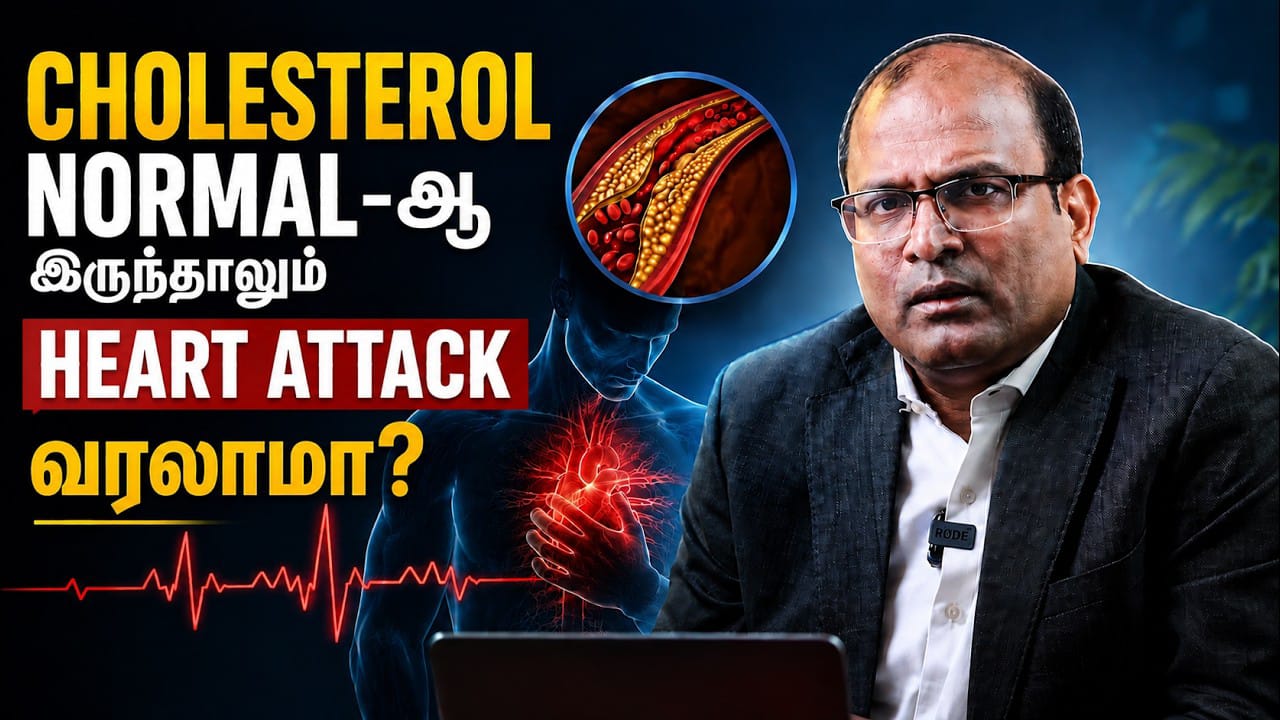
Many people believe that if their cholesterol report is “normal,” they are protected from heart disease.
A common question cardiologists hear is:
“My LDL cholesterol is below 100. Can I still develop a heart blockage or heart attack?”
The answer is yes.
Having a lower LDL cholesterol level is certainly beneficial and can substantially reduce cardiovascular risk. However, cholesterol is only one part of the overall heart-risk picture.
A person can have an LDL level that appears acceptable and still develop coronary artery disease because of other factors such as:
- Diabetes
- High blood pressure
- Smoking
- Family history
- Age
- Obesity
- Lack of physical activity
- Chronic stress
- Poor sleep
- Abnormal lipoproteins
- Other metabolic and inflammatory risk factors
This becomes even more important in people who have already suffered a heart attack. After a heart attack, an LDL level that might previously have been considered acceptable may no longer be low enough for that individual.
In this article, Dr. S. Nagendra Boopathy, Professor of Cardiology and Senior Consultant Interventional Cardiologist in Chennai, explains why heart attacks can occur despite apparently normal cholesterol, why LDL targets change after cardiovascular disease develops, and why cholesterol medicines should not be stopped simply because the latest report looks normal.
What Is LDL Cholesterol?
Cholesterol is a fatty substance that performs several important functions in the body.
Because cholesterol cannot travel freely through the bloodstream, it is transported in particles known as lipoproteins.
One of the most important is:
LDL – Low-Density Lipoprotein
LDL is commonly referred to as “bad cholesterol” because higher levels are associated with the development of fatty deposits inside arteries.
Over time, LDL-containing particles can enter the wall of a coronary artery.
This may contribute to:
- Inflammation
- Plaque formation
- Narrowing of the artery
- Plaque instability
- Blood-clot formation
If a plaque suddenly ruptures and a clot blocks blood flow to the heart muscle, a heart attack can occur.
Is an LDL Below 100 Always “Normal”?
This is where the subject becomes more complicated.
There is no single LDL number that is ideal for every person.
An LDL cholesterol level that may be acceptable in a young person with no cardiovascular risk factors may be too high for someone who has already had a heart attack, angioplasty, stent or bypass surgery.
Modern cardiovascular prevention increasingly follows the principle:
The higher the cardiovascular risk, the lower the LDL target usually needs to be.
Therefore, LDL should not be interpreted in isolation.
The doctor looks at the whole patient.
Why Have LDL Targets Become Lower Over Time?
Our understanding of cholesterol and cardiovascular disease has changed considerably.
Years ago, doctors were less aggressive about lowering LDL cholesterol in patients without known heart disease.
As evidence accumulated, it became increasingly clear that lowering LDL can reduce the risk of:
- Heart attack
- Stroke
- Recurrent cardiovascular events
- Need for further cardiac procedures
For someone who has already experienced a heart attack, the goal is usually much more aggressive than simply bringing LDL below 100.
Many high-risk patients may be advised to achieve very low LDL levels, depending on their individual risk and current treatment guidelines.
Can Heart Disease Occur Even When LDL Is Below 100?
Yes.
This is one of the most important messages for patients.
Imagine a person with an LDL cholesterol of 90 mg/dL.
That may sound reassuring.
But what if the same individual also:
- Has diabetes
- Smokes
- Has high blood pressure
- Has a strong family history
- Is overweight
- Exercises very little
- Sleeps poorly
- Has chronic stress
Their cardiovascular risk may still be substantial.
Heart disease is usually the result of multiple risk factors interacting over many years.
Cholesterol is extremely important, but it is not the only contributor.
A “Normal” Cholesterol Report Does Not Mean Zero Heart Risk
A laboratory report may flag your LDL as being within a general reference range.
That does not necessarily mean your personal cardiovascular risk is low.
Laboratory reference ranges are not the same as individual treatment targets.
For example:
Person A
- Age 30
- No diabetes
- No hypertension
- No smoking
- No family history
- No cardiovascular disease
Person B
- Age 55
- Diabetes
- Previous heart attack
- Coronary stent
An LDL of 90 mg/dL does not mean the same thing for both patients.
Person B generally requires a much more aggressive prevention strategy.
What Other Risk Factors Can Cause Heart Disease?
Heart disease is usually multifactorial.
Important risk factors include:
1. Diabetes
Diabetes is one of the strongest cardiovascular risk factors.
Persistently elevated blood sugar can damage blood vessels and accelerate atherosclerosis.
People with diabetes can develop:
- Coronary artery disease
- Heart attack
- Stroke
- Kidney disease
- Peripheral vascular disease
The risk increases further when diabetes is combined with:
- High LDL cholesterol
- Hypertension
- Smoking
- Obesity
Why Duration of Diabetes Matters
A person who develops diabetes at a younger age may live with the condition for many years.
That means the arteries may be exposed to high blood sugar and metabolic abnormalities for a longer period.
Therefore, early diagnosis and good long-term diabetes control are extremely important.
2. High Blood Pressure
Hypertension can silently damage the inner lining of blood vessels.
Over time, it contributes to:
- Coronary artery disease
- Heart attack
- Heart failure
- Stroke
- Kidney disease
Many patients with high blood pressure feel completely normal.
That is why regular monitoring matters.
3. Smoking
Smoking can:
- Damage artery walls
- Increase inflammation
- Promote clot formation
- Increase heart rate
- Increase blood pressure
- Reduce oxygen delivery
Even a person with relatively good LDL cholesterol may have significant cardiovascular risk if they smoke regularly.
4. Family History
Genetic predisposition can significantly influence heart disease.
Pay particular attention if close relatives experienced:
- Heart attack at a young age
- Angioplasty
- Bypass surgery
- Sudden cardiac death
- Severe cholesterol abnormalities
A strong family history should encourage earlier prevention and screening.
5. Age
Cardiovascular risk increases with age because arteries are exposed to risk factors over many years.
However, younger people are not immune.
Young adults with:
- Diabetes
- Smoking
- Severe cholesterol disorders
- Obesity
- Strong genetic risk
can develop premature coronary artery disease.
6. Chronic Stress
Stress alone does not explain every heart attack, but prolonged stress can contribute to an unhealthy cardiovascular environment.
Stress may lead to:
- Poor sleep
- High blood pressure
- Smoking
- Overeating
- Reduced physical activity
- Poor diabetes control
The combination can substantially increase long-term risk.
7. Poor Sleep
Consistently inadequate sleep can influence:
- Blood pressure
- Blood sugar
- Appetite
- Stress hormones
- Body weight
- Metabolic health
Sleep should therefore be considered part of cardiovascular prevention.
Most adults benefit from regular, adequate restorative sleep.
8. Physical Inactivity
A sedentary lifestyle contributes to:
- Weight gain
- Insulin resistance
- Poor cardiovascular fitness
- High blood pressure
- Unfavourable metabolic health
Regular physical activity is an important part of reducing cardiovascular risk.
9. Unhealthy Diet
A diet dominated by:
- Refined carbohydrates
- Added sugar
- Deep-fried foods
- Highly processed foods
- Excess saturated fat
- Excess salt
can worsen multiple cardiovascular risk factors.
A better dietary pattern emphasises:
- Vegetables
- Whole fruits
- Pulses
- Legumes
- Whole grains
- Nuts
- Seeds
- Adequate protein
- Appropriate healthy fats
Why Diabetes Deserves Special Attention in Indians
Diabetes is extremely common in India and South Asian populations.
Many people develop:
- Insulin resistance
- Type 2 diabetes
- Abdominal obesity
at relatively younger ages.
This means that someone who believes they have “normal cholesterol” may still have significant cardiovascular risk because of undiagnosed or poorly controlled diabetes.
Regular screening is especially important when there is:
- Family history of diabetes
- Overweight
- Abdominal obesity
- High blood pressure
- Sedentary lifestyle
- Previous gestational diabetes
What Is Small Dense LDL?
Not all LDL particles are identical.
Some individuals may have a greater proportion of small, dense LDL particles.
These particles have been studied because they may be more strongly associated with atherosclerosis in certain metabolic conditions.
However, routine treatment usually focuses on the patient’s overall cardiovascular risk and standard lipid measurements rather than requiring specialised LDL-particle testing in everyone.
The key point is:
A standard LDL number does not always tell the entire metabolic story.
Can Other Lipoproteins Affect Heart Risk?
Yes.
For selected patients, cardiologists may consider additional markers such as:
Lipoprotein(a), or Lp(a)
Lp(a) is strongly influenced by genetics and may increase cardiovascular risk even when conventional cholesterol levels appear reasonably controlled.
ApoB
Apolipoprotein B reflects the number of atherogenic lipoprotein particles circulating in the blood.
These tests are not necessarily required for every patient, but they may provide useful information in selected individuals, particularly when cardiovascular disease occurs unexpectedly.
Why Did I Have a Heart Attack If My Cholesterol Was Normal?
This is often the first question families ask after an apparently healthy person suffers a heart attack.
There may not be one simple explanation.
The person may have had:
- Undiagnosed diabetes
- High blood pressure
- Smoking exposure
- Genetic predisposition
- Elevated Lp(a)
- Metabolic abnormalities
- Chronic stress
- Poor sleep
- Other cardiovascular risk factors
In many cases, several moderate risk factors combine over time.
After a Heart Attack, Why Do Doctors Prescribe Statins Even If LDL Is Already Low?
This is one of the most important treatment concepts to understand.
Suppose a patient arrives with a heart attack and their LDL cholesterol is:
90 mg/dL
The patient may ask:
“My cholesterol is already below 100. Why are you giving me a statin?”
Because once someone has suffered a heart attack, they are considered at very high cardiovascular risk.
For these patients, “below 100” may no longer be an adequate target.
The doctor may want LDL lowered substantially further to reduce the risk of another cardiovascular event.
What Are Statins?
Statins are cholesterol-lowering medicines.
Common examples include:
- Atorvastatin
- Rosuvastatin
They help reduce LDL cholesterol by decreasing cholesterol production in the liver and increasing the liver’s ability to remove LDL from the bloodstream.
They also play an important role in stabilising coronary artery plaque.
This is why statins are a cornerstone of treatment after:
- Heart attack
- Angioplasty
- Stenting
- Established coronary artery disease
If My LDL Falls to 35, Can I Stop the Statin?
No—not simply because the LDL result is now excellent.
This is a very common misunderstanding.
The LDL may be low because the medicine is working.
If the medicine is stopped, LDL may rise again.
It is similar to blood pressure medication.
If a person has excellent blood pressure while taking medication, that does not necessarily mean the underlying tendency toward hypertension has disappeared.
Why Stopping Statins Can Be Dangerous After a Heart Attack
After coronary artery disease has been diagnosed, stopping cholesterol-lowering medication without medical advice may allow LDL levels to rise again.
This can contribute to:
- Progression of existing plaque
- Development of new plaque
- Future coronary blockages
- Recurrent heart attack
- Problems in other coronary arteries
The purpose of treatment is not simply to produce a “good laboratory report.”
The purpose is to reduce the chance of another cardiovascular event.
Does Cholesterol Build Up Inside a Stent?
Coronary disease can continue to progress even after stent placement.
A stent treats one specific narrowing.
It does not cure the underlying atherosclerotic process throughout the cardiovascular system.
That is why long-term prevention remains essential after angioplasty.
Patients usually need:
- Antiplatelet medicines
- Cholesterol-lowering therapy
- Diabetes management
- Blood-pressure control
- Healthy diet
- Exercise
- Smoking cessation
depending on their individual situation.
Does Bypass Surgery Cure Cholesterol Problems?
No.
Bypass surgery creates alternative routes for blood to reach heart muscle around severely narrowed coronary arteries.
But the underlying tendency to develop atherosclerosis remains.
Disease can potentially progress in:
- Native coronary arteries
- Other vessels
- Bypass grafts
Therefore, long-term risk-factor control remains essential.
“My Cholesterol Is Normal Now” — What Does That Actually Mean?
Ask yourself:
Why is it normal?
Is it normal because:
- Your natural LDL was always low?
or because:
- You changed your diet?
- Lost weight?
- Started exercising?
- Began taking a statin?
- Started combination lipid-lowering treatment?
If medication helped lower LDL, stopping the medication may remove the very factor keeping your cholesterol controlled.
Cholesterol Medicines Are Usually Long-Term Prevention
After a heart attack, cholesterol treatment should generally be viewed as part of secondary prevention.
Secondary prevention means preventing another cardiovascular event in someone who already has established disease.
Other secondary-prevention strategies may include:
- Antiplatelet therapy
- Blood-pressure medication
- Diabetes medication
- Exercise
- Smoking cessation
- Cardiac rehabilitation
Patients should not alter these medicines on their own.
How Low Should LDL Be After a Heart Attack?
There is no single target that should be applied blindly to every patient.
However, after:
- Heart attack
- Coronary stent
- Established coronary artery disease
cardiologists often aim for much lower LDL levels than the general population.
Depending on the patient’s overall risk, the target may be substantially below 100 mg/dL.
Your treating cardiologist should determine the appropriate target.
Can LDL Become “Too Low”?
This is another frequent concern.
Patients sometimes become worried when their LDL falls to values such as:
- 50
- 40
- 35
after intensive treatment.
For very high-risk cardiovascular patients, low LDL levels may be intentionally achieved to reduce future risk.
Do not reduce or stop medication simply because the number looks lower than a general laboratory reference range.
Discuss it with your cardiologist.
How Can You Reduce Heart Risk Beyond Cholesterol?
The best cardiovascular prevention strategy treats all major risk factors together.
1. Control Diabetes
If you have diabetes:
- Take medication regularly
- Monitor glucose as advised
- Know your HbA1c
- Maintain a healthy diet
- Exercise consistently
- Attend regular follow-ups
Good diabetes control can significantly reduce complications.
2. Control Blood Pressure
Know your blood-pressure numbers.
Take prescribed medication consistently.
Do not stop medicine simply because a few readings become normal.
3. Stop Smoking Completely
Smoking cessation is one of the strongest cardiovascular interventions available.
There is no safe level of regular cigarette smoking for someone with coronary disease.
4. Follow a Balanced Diet
Choose more:
- Vegetables
- Whole fruits
- Fibre
- Whole grains
- Pulses
- Nuts
- Appropriate protein
Reduce excessive:
- Refined carbohydrates
- Sugar
- Deep-fried foods
- Processed foods
- Trans fats
- Excess saturated fat
- Excess salt
5. Get Adequate Protein
Protein helps preserve muscle, particularly as people age.
Good choices may include:
- Pulses
- Beans
- Eggs
- Fish
- Lean poultry
- Curd
- Paneer
- Other appropriate sources
Protein needs should be individualised, particularly in people with kidney disease.
6. Exercise Regularly
Regular physical activity can improve:
- Blood pressure
- Blood sugar
- Weight
- Cardiovascular fitness
- Sleep
- Stress levels
Patients with known heart disease should follow exercise advice given by their cardiologist or cardiac rehabilitation team.
7. Sleep Adequately
Aim for a consistent sleep schedule.
For many adults, around 7–9 hours of good-quality sleep is an appropriate general goal.
Persistent snoring, choking during sleep or severe daytime sleepiness should be discussed with a doctor.
8. Manage Stress
Chronic stress cannot always be eliminated, but it can be managed.
Helpful approaches include:
- Regular physical activity
- Adequate sleep
- Relaxation techniques
- Social connection
- Yoga or meditation where appropriate
- Professional counselling when necessary
What Numbers Should You Know?
Adults—particularly those with cardiovascular risk—should be familiar with:
Cholesterol
- LDL
- HDL
- Triglycerides
Diabetes
- Fasting blood glucose
- HbA1c where appropriate
Blood Pressure
Weight and Waist Circumference
These numbers provide a much broader picture than LDL alone.
Frequently Asked Questions
1. Can I have a heart attack if my LDL is below 100?
Yes.
A lower LDL reduces risk but does not eliminate it.
Other factors such as diabetes, hypertension, smoking, family history and age still matter.
2. Does normal cholesterol mean my heart is healthy?
Not necessarily.
A normal lipid profile is only one favourable factor.
Cardiovascular health depends on your complete risk profile.
3. Can someone with LDL 90 have blocked arteries?
Yes.
An LDL of 90 does not guarantee that the coronary arteries are free of plaque.
Past exposure to cholesterol and other risk factors also matter.
4. Can someone with low cholesterol have a massive heart attack?
Yes, although lower LDL generally reduces risk.
Heart attacks can still occur when other strong cardiovascular risk factors are present.
5. Why did I have a heart attack even though I had no family history?
Family history is only one risk factor.
Other possible factors include:
- Diabetes
- Hypertension
- Smoking
- Cholesterol exposure
- Age
- Metabolic abnormalities
- Lifestyle factors
6. Is LDL the only cholesterol that matters?
No.
Doctors also assess:
- HDL
- Triglycerides
- Non-HDL cholesterol
and occasionally markers such as ApoB or Lp(a) in selected patients.
7. Is LDL below 100 considered good?
For many lower-risk individuals it may be reasonable.
For someone with established coronary disease, the target is often considerably lower.
8. What should my LDL be after a heart attack?
The goal should be individualised by your cardiologist.
Patients with established cardiovascular disease are generally treated much more aggressively than those who have never had a cardiac event.
9. Why do I need atorvastatin if my LDL is already normal?
Because after a heart attack or diagnosis of coronary artery disease, the aim is not simply to keep LDL within a general laboratory range.
The aim is to lower cardiovascular risk as much as reasonably possible.
10. Is rosuvastatin only for people with high cholesterol?
No.
It may be prescribed to high-risk patients even when their starting LDL does not appear extremely high.
11. Can I stop my statin when LDL reaches 35?
Not unless your cardiologist advises you to do so.
The medicine may be the reason your LDL has fallen to 35.
Stopping it can cause LDL to rise again.
12. Are statins lifelong after a heart attack?
Many patients with established coronary artery disease require long-term lipid-lowering therapy.
The exact medication and dose may change over time, but treatment should only be altered by the treating doctor.
13. Will stopping statins increase my heart attack risk?
In a person with established cardiovascular disease, stopping indicated lipid-lowering therapy can increase future cardiovascular risk.
Do not discontinue it without medical guidance.
14. Can diet replace statins after a heart attack?
Usually not.
Diet is extremely important but generally complements rather than replaces evidence-based cholesterol-lowering medication in patients with established coronary artery disease.
15. Can exercise replace cholesterol medicine?
No.
Exercise is strongly recommended for most cardiac patients but does not replace prescribed medication.
16. Does diabetes increase heart attack risk even if cholesterol is normal?
Yes.
Diabetes is a major independent cardiovascular risk factor.
A person with diabetes can develop coronary disease despite relatively acceptable LDL levels.
17. What is HbA1c?
HbA1c estimates your average blood-glucose control over the previous several months.
It is commonly used to diagnose and monitor diabetes.
18. Does controlling diabetes prevent heart attacks?
Good diabetes control is an important part of reducing cardiovascular complications.
However, cardiovascular prevention also requires management of:
- Blood pressure
- Cholesterol
- Weight
- Smoking
- Exercise
19. Can high blood pressure cause a heart attack if cholesterol is normal?
Yes.
High blood pressure independently damages arteries and increases cardiovascular risk.
20. Can stress cause heart disease with normal cholesterol?
Chronic stress can contribute to cardiovascular risk, particularly when it leads to poor sleep, smoking, hypertension, unhealthy eating or inactivity.
21. Can air pollution affect heart health?
Long-term exposure to air pollution has been associated with cardiovascular risk.
It should be considered alongside traditional risk factors rather than as a replacement explanation for them.
22. If I exercise every day, can I stop worrying about cholesterol?
No.
Exercise substantially improves cardiovascular health but does not eliminate genetic or metabolic cholesterol risk.
23. Can a thin person have coronary artery disease?
Yes.
Thin individuals can still have:
- Diabetes
- High blood pressure
- Genetic cholesterol abnormalities
- Elevated Lp(a)
- Strong family history
Body appearance alone cannot determine cardiovascular health.
24. What is Lp(a)?
Lipoprotein(a) is a genetically influenced lipoprotein associated with increased cardiovascular risk.
Testing may be useful in selected people, particularly those with premature or unexplained cardiovascular disease.
25. Should everyone get an Lp(a) test?
Not necessarily, although many modern prevention strategies increasingly consider measuring it at least once in selected adults.
Your cardiologist can determine whether it is relevant to your risk profile.
26. Do I need an angiogram if my cholesterol is high?
Not automatically.
Angiography is usually performed because of symptoms or evidence suggesting significant coronary disease—not simply because cholesterol is elevated.
27. Can an ECG tell whether my arteries are blocked?
Not reliably.
An ECG provides information about the electrical activity of the heart.
It may show evidence of a heart attack or other abnormalities but cannot directly map coronary blockages.
28. Should I check my cholesterol after starting statins?
Yes.
Follow-up lipid testing helps your doctor determine:
- How well the medication is working
- Whether the LDL target has been achieved
- Whether treatment adjustments are necessary
29. If my cholesterol becomes normal, does that mean the blockage has disappeared?
Not necessarily.
Lowering LDL helps stabilise plaque and reduce future cardiovascular events.
It does not mean that every existing coronary plaque completely disappears.
30. What is the most important message for heart patients?
Do not focus only on whether your LDL is “normal.”
Your risk depends on the whole picture.
And if you have already had:
- A heart attack
- Angioplasty
- A coronary stent
- Bypass surgery
continue your prescribed cholesterol-lowering medication unless your cardiologist specifically changes it.
Final Takeaway
Having an LDL cholesterol below 100 is beneficial, but it does not provide complete protection against heart disease.
Heart attacks result from the combined effect of multiple risk factors, including:
- Diabetes
- High blood pressure
- Smoking
- Family history
- Age
- Stress
- Physical inactivity
- Poor metabolic health
- Cholesterol
The most important distinction is between someone who has never had cardiovascular disease and someone who has already experienced a heart attack.
After a heart attack, an LDL that previously appeared “normal” may still need to be lowered further.
And when medication successfully lowers LDL to a very low level, that is generally a sign that the treatment is working—not a reason to stop it.
Do not stop statins or other prescribed cardiac medicines simply because your latest cholesterol report looks good.
Long-term prevention means controlling all of your risk factors together, taking prescribed medicines consistently and maintaining a sustainable heart-healthy lifestyle.
Consult Dr. S. Nagendra Boopathy
Dr. S. Nagendra Boopathy
MBBS (MMC), MD (PGIMER), DM (Cardiology – AIIMS), FACC, FSCAI
Professor of Cardiology
Senior Consultant – Interventional Cardiology
Complex Coronary & Structural Heart Disease Interventions
Sri Ramachandra Medical Centre
No. 1, Ramachandra Nagar
Porur, Chennai – 600116
Tamil Nadu, India
Dr. Boopathy Heart Care
6th Cross Street
Director’s Colony
Kodambakkam
Chennai – 600024
Appointment / Contact
+91 87544 98680
Sri Ramachandra Medical Centre Enquiries
044-4592 8844 / 044-4592 8855
044-4001 2323
Emergency Services
044-4001 2345
Medical Disclaimer: This article is intended for general educational and awareness purposes only. LDL targets and cholesterol treatment should be individualised according to cardiovascular history, age, diabetes, blood pressure and other risk factors. Never start, stop or change statins or other cardiac medicines without consulting your treating cardiologist. If you develop chest pain, severe breathlessness, unexplained sweating or other symptoms suggestive of a heart attack, seek urgent medical care.