When people think of a heart attack, they often picture an elderly person suddenly developing severe chest pain.
That picture can be dangerously misleading.
Heart attacks are not limited to older adults, and chest pain is not always present.
Young adults can develop serious coronary artery disease. Physically fit people can have underlying cardiac risk factors. Women can develop heart disease. And in some patients, a heart attack may present as nothing more than unusual breathlessness, sweating, nausea or unexplained fatigue.
Understanding these less obvious presentations is important because the sooner a heart attack is recognised and treated, the greater the opportunity to protect the heart muscle.
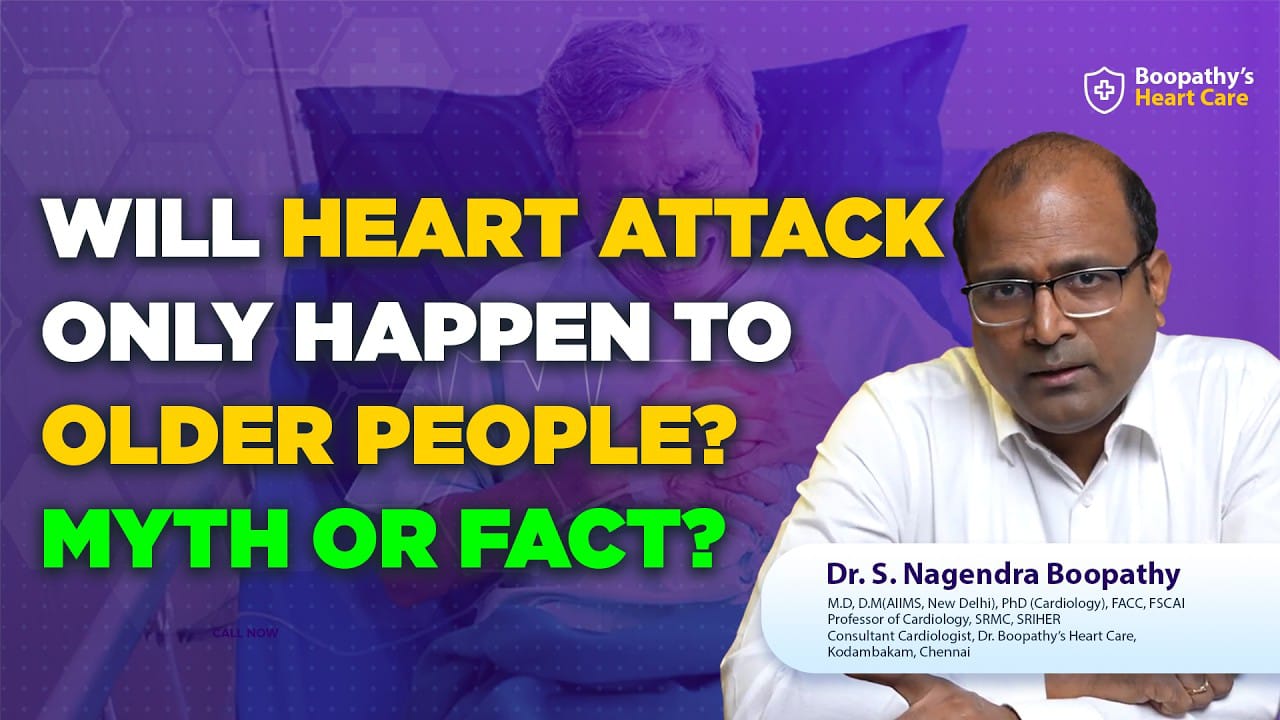
In this article, Dr. S. Nagendra Boopathy, Interventional Cardiologist in Chennai, addresses some of the most common misconceptions about heart attacks and explains who is at risk, what symptoms should never be ignored and how lifestyle changes can reduce cardiovascular risk.
https://youtu.be/KZhnE6f-dSA?si=9-V9mr7K07SpgX81
What Actually Happens During a Heart Attack?
A heart attack, medically known as a myocardial infarction, usually occurs when blood flow through one of the coronary arteries supplying the heart muscle becomes suddenly reduced or blocked.
A common underlying process is the development of fatty deposits or plaque within the coronary arteries.
If a plaque becomes unstable and ruptures, a blood clot can form around it.
If that clot significantly blocks blood flow, part of the heart muscle may become deprived of oxygen.
Without timely treatment, heart muscle can become permanently damaged.
That is why a suspected heart attack should always be treated as a medical emergency.
Myth 1: “Heart Attacks Only Happen to Older People”
False.
Age is certainly an important cardiovascular risk factor, and heart disease becomes more common as people grow older.
But young age does not provide complete protection.
Heart attacks can occur in people in their:
- 20s
- 30s
- 40s
- And, rarely, even during adolescence
What matters is not age alone.
Your overall cardiovascular risk profile matters.
A younger person with multiple major risk factors can sometimes have cardiovascular health that is far worse than their chronological age would suggest.
Why Are Heart Attacks Occurring in Younger People?
Several factors can increase cardiovascular risk at a younger age.
1. Smoking and Tobacco Use
Smoking is one of the most important preventable causes of cardiovascular disease.
Tobacco can:
- Damage the lining of blood vessels
- Promote inflammation
- Increase clot formation
- Accelerate plaque development
- Increase heart rate and blood pressure
- Reduce oxygen delivery
A person does not need to smoke for several decades before cardiovascular effects begin.
2. Recreational Drug Use
Certain stimulant drugs, particularly cocaine and amphetamine-type substances, can have severe cardiovascular effects.
They may cause:
- Sudden increases in heart rate
- Very high blood pressure
- Coronary artery spasm
- Disturbances in heart rhythm
- Increased oxygen demand
- Blood-clot formation
In rare situations, serious cardiac events can occur even in very young people.
A teenager or young adult should therefore never be assumed to be “too young” for a cardiac emergency if the symptoms are concerning.
3. Very High Cholesterol
Some young individuals have extremely high cholesterol because of inherited conditions.
One important example is familial hypercholesterolaemia, in which LDL or “bad” cholesterol can remain markedly elevated from childhood.
When cholesterol exposure begins at a very young age, plaque formation may also begin much earlier.
Someone may be only 30 or 40 years old chronologically but may have already experienced decades of exposure to unhealthy cholesterol levels.
This is why cholesterol screening is particularly important when there is a strong family history of:
- Early heart attack
- High cholesterol
- Angioplasty
- Bypass surgery
- Sudden cardiac death
4. Diabetes
Diabetes substantially increases cardiovascular risk.
Persistently elevated blood glucose can damage blood vessels and accelerate atherosclerosis.
The risk is especially important when diabetes is combined with:
- High cholesterol
- High blood pressure
- Smoking
- Obesity
- Kidney disease
Young people living with diabetes should therefore take cardiovascular prevention seriously.
5. High Blood Pressure
Hypertension is often called a silent condition because many people have no obvious symptoms.
Over time, uncontrolled blood pressure can damage:
- Coronary arteries
- Heart muscle
- Brain
- Kidneys
- Blood vessels throughout the body
Checking blood pressure regularly is important even when you feel completely healthy.
6. Family History of Early Heart Disease
Genetics matters.
Your risk deserves closer attention if a close family member experienced cardiovascular disease at a relatively young age.
Important family history may include:
- Premature heart attack
- Early angioplasty
- Early bypass surgery
- Sudden cardiac death
- Severe cholesterol abnormalities
- Diabetes or hypertension developing unusually early
Family history does not guarantee that you will develop heart disease.
But it is a reason to start prevention earlier.
7. Poor Diet
A diet dominated by:
- Highly processed food
- Fried foods
- Excess refined carbohydrates
- Excess sugar
- Processed meat
- High-sodium foods
- Frequent junk food
can contribute to cardiovascular risk, especially when combined with inactivity and weight gain.
A heart-healthy diet should focus more on:
- Vegetables
- Fruits
- Whole grains
- Legumes
- Nuts
- Seeds
- Appropriate lean proteins
- Fibre-rich foods
- Healthy sources of fat
8. Physical Inactivity
Modern lifestyles often involve hours of:
- Sitting at a desk
- Driving
- Screen time
- Television
- Working from home
with very little meaningful movement.
Regular physical activity helps improve:
- Blood pressure
- Blood sugar
- Cholesterol
- Weight management
- Cardiovascular fitness
- Sleep
- Stress management
Even small increases in activity can be valuable when maintained consistently.
9. Stress and Poor Sleep
Stress itself is not the only issue.
Chronic stress can lead to a combination of unhealthy behaviours such as:
- Poor sleep
- Irregular meals
- Smoking
- Alcohol use
- Reduced physical activity
- Increased blood pressure
Persistent sleep deprivation may also adversely affect cardiovascular health.
For most adults, aiming for adequate, regular, restorative sleep—often around 7–9 hours—is an important part of cardiovascular health.
Are South Asians at Higher Cardiovascular Risk?
People of South Asian ancestry, including Indians, can develop cardiovascular disease at relatively younger ages.
This makes early attention to risk factors particularly important.
Do not wait until your 50s or 60s to think about heart health.
Adults—especially those with a family history or other risk factors—should know basic numbers such as:
- Blood pressure
- Blood glucose
- HbA1c when appropriate
- Total cholesterol
- LDL cholesterol
- HDL cholesterol
- Triglycerides
- Body weight and waist circumference
Prevention works best before symptoms develop.
Myth 2: “If There Is No Chest Pain, It Cannot Be a Heart Attack”
False—and potentially dangerous.
Chest discomfort is certainly one of the most recognised symptoms of a heart attack.
But not every patient experiences the classic crushing chest pain described in movies.
Some patients can have a heart attack with relatively little chest discomfort—or even without obvious chest pain.
What Does Typical Heart Attack Chest Pain Feel Like?
Patients may describe:
- Pressure
- Tightness
- Heaviness
- Squeezing
- Burning
- A weight over the chest
- An uncomfortable fullness
The discomfort may spread to the:
- Left arm
- Both arms
- Shoulder
- Back
- Neck
- Jaw
- Upper abdomen
But symptoms vary significantly from person to person.
Heart Attack Symptoms Without Chest Pain
Patients may instead experience what doctors sometimes describe as anginal equivalents.
These can include:
Shortness of Breath
Unexplained breathlessness—particularly if it begins suddenly or occurs with exertion—can occasionally represent a heart problem.
Sweating
Sudden cold or excessive sweating without a clear reason can accompany a cardiac event.
Palpitations
Some patients describe:
- Racing heartbeat
- Pounding heartbeat
- Irregular heartbeat
especially when accompanied by weakness, breathlessness or discomfort.
Nausea or Vomiting
A heart attack can occasionally resemble a digestive problem.
Patients may assume that nausea or vomiting is due to food poisoning, indigestion or acidity.
Upper Abdominal Discomfort
Some cardiac symptoms are felt in the upper abdomen rather than directly over the chest.
That is one reason persistent “gas” or indigestion-like symptoms in a high-risk person should not automatically be dismissed.
Unusual Fatigue
Rarely, the dominant symptom can simply be profound tiredness.
Someone may feel:
“I suddenly have no energy.”
or
“Something doesn’t feel right.”
Unexplained fatigue becomes more concerning when associated with:
- Breathlessness
- Sweating
- Dizziness
- Nausea
- Reduced exercise tolerance
What Is a Silent Heart Attack?
A silent myocardial infarction is a heart attack that occurs without the dramatic symptoms people normally associate with a cardiac emergency.
The patient may have:
- Mild discomfort
- Breathlessness
- Fatigue
- Indigestion-like symptoms
- Sweating
- Nausea
or symptoms subtle enough to be ignored.
Silent or less typical heart attacks are particularly important in certain groups, including some patients with:
- Diabetes
- Older age
- Kidney disease
This is why symptoms must always be interpreted together with the patient’s risk factors.
When Should You Seek Medical Attention?
Seek urgent medical evaluation for new or unexplained:
- Chest pressure or tightness
- Severe chest discomfort
- Breathlessness
- Cold sweating
- Fainting or near-fainting
- Sudden weakness
- Persistent nausea with chest discomfort
- Pain spreading to the arm, jaw or back
particularly if you also have:
- Diabetes
- High blood pressure
- High cholesterol
- Smoking history
- Strong family history
- Previous heart disease
Do not wait for severe chest pain before taking symptoms seriously.
When a heart attack is suspected, time matters.
Myth 3: “I’m Physically Fit, So I Don’t Need to Worry About Heart Disease”
Partly true—but dangerously incomplete.
Physical fitness is highly beneficial.
Regular exercise can improve:
- Blood pressure
- Blood sugar
- Cholesterol
- Body weight
- Heart and lung fitness
- Sleep
- Mental wellbeing
But exercise is one part of cardiovascular health, not a guarantee against heart disease.
A physically fit individual can still have:
- Familial high cholesterol
- Diabetes
- High blood pressure
- Genetic predisposition
- Smoking-related vascular disease
- Coronary artery abnormalities
The “Fit on the Outside” Problem
Someone may:
- Look slim
- Go to the gym
- Run regularly
- Play sports
and still have significant cardiovascular risk.
For example, a physically active person with an LDL cholesterol level that has been extremely high for many years still needs medical evaluation.
Fitness should never be used as a reason to ignore abnormal blood tests or concerning symptoms.
Can Athletes Have Heart Problems?
Yes.
Athletes and physically active individuals can develop cardiovascular conditions.
Exercise is protective overall, but it does not eliminate every possible heart problem.
Symptoms during exercise that deserve attention include:
- Chest pain
- Unusual breathlessness
- Dizziness
- Blackouts
- Palpitations
- Unexpected reduction in performance
Such symptoms should be medically assessed rather than blamed automatically on tiredness.
Myth 4: “Heart Disease Mainly Affects Men”
Heart disease affects both men and women.
Men tend to develop coronary artery disease at younger ages on average.
Before menopause, female sex hormones may contribute to some cardiovascular protection.
However, this does not mean younger women cannot develop heart disease.
Women with major risk factors—including:
- Diabetes
- Smoking
- High cholesterol
- Hypertension
- Obesity
- Strong family history
can still develop significant coronary disease.
Heart Risk After Menopause
After menopause, cardiovascular risk in women increases substantially.
Changes may occur in:
- Cholesterol
- Blood pressure
- Body-fat distribution
- Glucose metabolism
- Vascular function
Therefore, women should not consider themselves protected from heart disease simply because they are female.
Heart-risk assessment becomes particularly important around and after menopause.
Are Heart Attack Symptoms Different in Women?
Women can certainly develop typical chest pain.
However, some women may present with less obvious symptoms such as:
- Breathlessness
- Nausea
- Back discomfort
- Jaw discomfort
- Fatigue
- Sweating
- Dizziness
The important message is not that men and women always experience completely different heart attacks.
It is that cardiac symptoms can vary, and women should not delay seeking care simply because symptoms do not match the classic description.
The Bigger Problem: Multiple Risk Factors Together
Cardiovascular risk increases significantly when several risk factors occur together.
For example, imagine a 38-year-old individual who:
- Smokes
- Has diabetes
- Has high LDL cholesterol
- Sleeps five hours a night
- Has a strong family history
- Does almost no exercise
Chronologically the individual may be young.
Cardiovascularly, however, that person may be at substantial risk.
This is why doctors focus on the overall risk profile, not age alone.
Three Important Lifestyle Changes for a Healthier Heart
Preventing heart disease does not require one magical food or supplement.
The biggest benefits generally come from consistently improving fundamental lifestyle factors.
1. Prioritise Good Sleep
Sleep is an important part of cardiovascular health.
Most adults should aim for a consistent pattern of adequate restorative sleep.
For many adults, this means approximately:
7–9 hours per night
Try to:
- Maintain a regular sleep schedule
- Avoid excessive late-night screen time
- Reduce caffeine late in the day
- Address persistent snoring
- Seek evaluation for possible sleep apnoea
- Treat chronic insomnia appropriately
Sleep should be considered part of heart-health management—not a luxury.
2. Eat for Long-Term Cardiovascular Health
A heart-friendly diet should generally contain more:
- Vegetables
- Whole fruits
- Fibre
- Whole grains
- Legumes
- Nuts and seeds
- Appropriate protein sources
while reducing excessive:
- Refined carbohydrates
- Added sugars
- Processed foods
- Trans fats
- Saturated fats
- Excessive salt
- Fried foods
There is no single “anti-heart-attack food.”
The overall dietary pattern followed consistently over years matters more.
3. Be Physically Active
Movement is one of the most powerful tools for improving cardiovascular health.
Depending on age and medical condition, activity may include:
- Walking
- Cycling
- Swimming
- Strength training
- Other aerobic exercise
Daily steps can also be a practical way of reducing sedentary behaviour.
For many people, working toward approximately 7,000–8,000 steps per day can be a useful activity goal, but there is no compulsory step number that suits everyone.
Someone who is currently inactive can start much lower and gradually increase activity.
Patients with established cardiovascular disease or significant symptoms should obtain medical guidance before starting strenuous exercise.
Don’t Forget the Other Major Heart-Health Priorities
Healthy lifestyle changes should also include:
Stop Smoking
There is no heart-healthy level of cigarette smoking.
Know Your Cholesterol
Do not wait for symptoms.
High cholesterol usually causes no warning signs until vascular disease has already developed.
Check Blood Pressure
Hypertension can remain completely silent for years.
Screen for Diabetes
Blood glucose and HbA1c testing may identify diabetes or prediabetes before complications develop.
Maintain a Healthy Weight
Excess abdominal fat is particularly associated with metabolic and cardiovascular risk.
Manage Stress
You cannot eliminate every source of stress, but you can improve how your body responds to it through:
- Exercise
- Sleep
- Social connection
- Relaxation techniques
- Appropriate professional support when needed
Heart Attack Prevention Should Start Before Symptoms
Many people only begin thinking seriously about their heart after:
- Chest pain
- An abnormal ECG
- An angiogram
- A heart attack
- A family member’s cardiac emergency
Prevention is more powerful when started earlier.
You do not need to wait until you develop symptoms.
Regular preventive assessment can identify:
- High blood pressure
- High cholesterol
- Diabetes
- Obesity
- Abnormal cardiovascular risk
before they result in a major event.
Frequently Asked Questions About Heart Attacks
1. Can a 25-year-old have a heart attack?
Yes, although heart attacks are less common at younger ages.
When they occur, doctors look carefully for factors such as:
- Smoking
- Recreational drug use
- Severe cholesterol disorders
- Diabetes
- Genetic conditions
- Strong family history
- Other underlying cardiovascular abnormalities
Young age should never be used to dismiss serious symptoms.
2. Can teenagers have heart attacks?
It is extremely uncommon, but serious cardiac events can occur in teenagers under unusual circumstances, including certain congenital or genetic conditions and stimulant drug exposure.
Any teenager with severe chest symptoms, collapse or significant breathlessness should receive medical attention.
3. Can cocaine cause a heart attack?
Yes.
Cocaine can cause coronary artery constriction, severe blood-pressure elevation, abnormal heart rhythms and increased clotting risk.
Heart attacks and other serious cardiovascular complications can occur even in young people.
4. Can I have a heart attack without chest pain?
Yes.
Although chest discomfort is common, some patients may primarily experience:
- Breathlessness
- Sweating
- Nausea
- Vomiting
- Fatigue
- Upper abdominal discomfort
- Palpitations
5. How can I recognise a silent heart attack?
A silent heart attack may produce subtle symptoms such as unusual fatigue, breathlessness, nausea or mild discomfort rather than dramatic chest pain.
Because symptoms are non-specific, diagnosis may require:
- ECG
- Blood tests such as cardiac troponin
- Echocardiography
- Other cardiac investigations
depending on the clinical situation.
6. Can gas or acidity feel like a heart attack?
Yes, symptoms can overlap.
Heart-related discomfort can sometimes feel like:
- Burning
- Indigestion
- Gas
- Upper abdominal discomfort
If symptoms are new, severe, persistent or associated with sweating or breathlessness—particularly in someone with cardiovascular risk factors—medical evaluation is safer than assuming it is acidity.
7. Does being young protect me from heart disease?
It lowers your statistical risk compared with an older adult, but it does not make the risk zero.
A younger person with multiple strong risk factors can still develop significant coronary disease.
8. I exercise every day. Can I still have a heart attack?
Yes.
Exercise reduces cardiovascular risk but cannot eliminate risk from factors such as:
- Genetic cholesterol disorders
- Smoking
- Diabetes
- Hypertension
- Strong family history
Think of fitness as one important part of prevention rather than complete protection.
9. Can a slim person have blocked heart arteries?
Yes.
Body weight alone does not determine coronary artery health.
Slim people can still have:
- High cholesterol
- Diabetes
- High blood pressure
- Genetic risk
- Smoking-related vascular disease
10. Can high cholesterol cause a heart attack in young adults?
Yes, especially when cholesterol is extremely high from a young age.
Inherited cholesterol disorders can result in decades of LDL exposure before a person reaches middle age.
11. Does diabetes increase heart attack risk?
Yes.
Diabetes is a major cardiovascular risk factor and can accelerate damage to blood vessels.
Risk is particularly high when combined with hypertension, abnormal cholesterol or smoking.
12. Can stress cause a heart attack?
Stress is only one part of cardiovascular risk.
Chronic stress can contribute indirectly by worsening:
- Blood pressure
- Sleep
- Smoking
- Eating habits
- Physical inactivity
Severe emotional or physical stress can also affect the cardiovascular system in other ways.
13. How much sleep is good for heart health?
Most adults should aim for approximately 7–9 hours of good-quality sleep each night, although individual needs vary.
Persistent poor sleep, loud snoring or excessive daytime sleepiness should be discussed with a doctor.
14. Are 10,000 steps necessary to protect the heart?
No.
Ten thousand is not a magical threshold.
Significant health benefits can occur below that level.
For many adults, gradually working toward approximately 7,000–8,000 steps per day may be a useful goal, depending on age and health.
Consistency matters more than chasing an exact number.
15. Can women have heart attacks before menopause?
Yes.
Although cardiovascular risk tends to rise after menopause, younger women can still develop coronary artery disease, especially when major risk factors are present.
16. Does menopause increase heart disease risk?
Cardiovascular risk generally increases after menopause.
Women should become particularly attentive to:
- Blood pressure
- Cholesterol
- Blood glucose
- Weight
- Physical activity
- Smoking
during and after this stage of life.
17. What tests should I do to check my heart risk?
The appropriate tests depend on age, symptoms and risk factors.
A basic preventive evaluation may include:
- Blood pressure
- Blood glucose
- HbA1c
- Lipid profile
- Weight and waist measurement
Additional tests such as ECG, echocardiography, treadmill testing or coronary imaging should be performed only when clinically appropriate.
18. Should everyone get an angiogram to prevent a heart attack?
No.
Angiography is not a routine screening test for every healthy individual.
The decision depends on:
- Symptoms
- Clinical findings
- ECG
- Stress testing
- Imaging
- Overall cardiovascular risk
A cardiologist can determine whether advanced testing is necessary.
19. What should I do if I suddenly develop chest pain?
New severe, persistent or concerning chest discomfort should be treated seriously.
If a heart attack is possible, seek emergency medical care immediately rather than waiting at home to see whether the pain disappears.
20. What is the most important way to prevent a heart attack?
There is no single measure.
The strongest prevention comes from controlling several factors together:
- Do not smoke
- Stay physically active
- Eat well
- Maintain healthy sleep
- Control blood pressure
- Control cholesterol
- Prevent or manage diabetes
- Maintain an appropriate body weight
- Attend medical check-ups when indicated
Final Takeaway
The idea that “heart attacks happen only to old people” is one of the most dangerous misconceptions about cardiovascular disease.
Age matters—but so do:
- Genetics
- Cholesterol
- Diabetes
- Blood pressure
- Tobacco
- Recreational drugs
- Physical inactivity
- Diet
- Sleep
- Stress
- Family history
Equally important, a heart attack does not always announce itself with dramatic chest pain.
Breathlessness, sweating, nausea, palpitations, upper abdominal discomfort or unexplained fatigue may sometimes be the warning signs.
Do not judge your heart risk only by your age, appearance or fitness level.
Know your numbers.
Know your family history.
Know the warning signs.
And when symptoms are concerning, seek medical attention early rather than waiting for the “classic” heart attack presentation.
Consult Dr. S. Nagendra Boopathy
Dr. S. Nagendra Boopathy
MBBS (MMC), MD (PGIMER), DM (Cardiology – AIIMS), FACC, FSCAI
Senior Consultant – Interventional Cardiology
Advanced Coronary & Structural Heart Disease Interventions
Sri Ramachandra Medical Centre
No. 1, Ramachandra Nagar
Porur, Chennai – 600116
Tamil Nadu, India
Clinic
6th Cross Street
Director’s Colony
Kodambakkam, Chennai – 600024
Appointment / Contact
+91 87544 98680
Sri Ramachandra Medical Centre Enquiries
044-4592 8844 / 044-4592 8855
044-4001 2323
Emergency Services
044-4001 2345
Medical Disclaimer: This article is intended for general educational and awareness purposes only and should not be used to diagnose or treat a medical condition. Symptoms of a heart attack can vary between individuals. If you develop severe or unexplained chest discomfort, breathlessness, sweating, fainting or other symptoms suggestive of a cardiac emergency, seek urgent medical care.