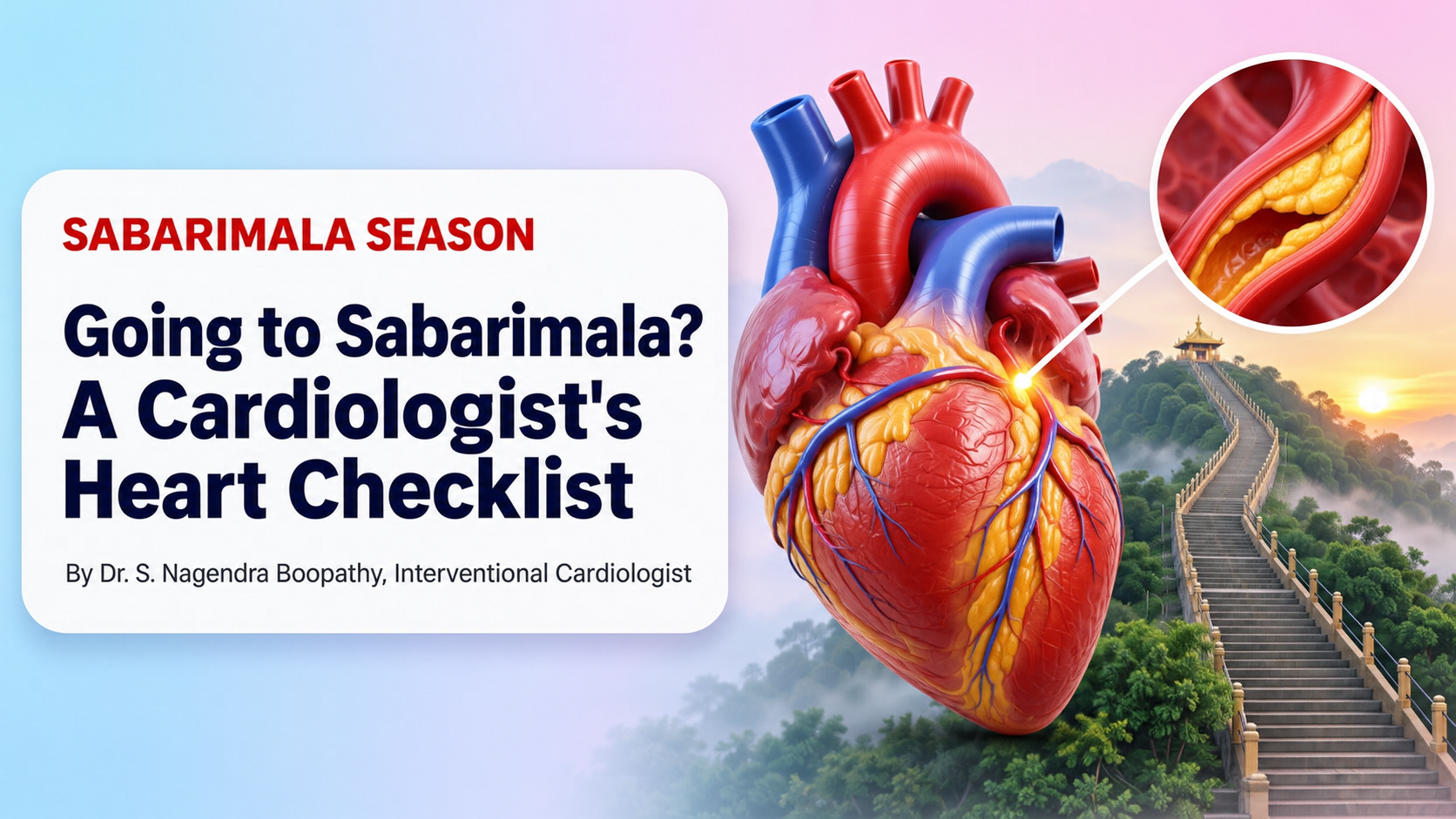
Going to Sabarimala This Season? A Cardiologist’s Heart Checklist, From Vratham to Sannidhanam
Every season, devotees collapse on the climb thinking it is just “gas trouble”. Here is how to make the yatra safely, step by step.
For lakhs of devotees from Chennai, Tamil Nadu and across South India, the Sabarimala pilgrimage is the most important journey of the year. Forty-one days of vratham. The black veshti. The irumudi on the head. And finally, the climb through the forest to Sannidhanam.
But there is a part of this story that is rarely discussed at home before the journey.
Most of these are not random. Officials and doctors on the route repeatedly point to the same pattern: pilgrims with known heart disease, BP or diabetes who stopped their tablets during vratham, climbed too fast, or dismissed chest discomfort as gas and kept walking.
Dr. S. Nagendra Boopathy, interventional cardiologist at Sri Ramachandra Medical Center, Chennai, sees many devotees before and after the season. This guide follows the yatra stage by stage, with what your heart needs at each point.
Why the Climb Is Hard on the Heart
The trek from Pamba to Sannidhanam is only about 4 to 5 km, but much of it is steep, especially the stretch through Neelimala and Appachimedu. Many devotees climb at night or in the early hours, after a long bus journey, poor sleep, irregular meals and sometimes days of fasting.
Climbing a steep slope with a load on your head suddenly raises heart rate and blood pressure. For a healthy heart, that is just exercise. For a heart with a hidden blockage, it is the moment demand outruns supply. If a cholesterol plaque ruptures under that strain, it can trigger a heart attack. In some people, it triggers a dangerous rhythm that causes sudden collapse.
The Kerala High Court itself observed that most cardiac events on the pilgrimage are triggered when devotees try to climb briskly or forcefully.
Your Yatra, Stage by Stage
Chest heaviness, burning in the upper stomach, pain in the jaw, shoulder or arm, cold sweat, unusual breathlessness or sudden tiredness while climbing should be treated as a possible heart attack until proven otherwise. Stop climbing. Sit down. Alert the nearest police, volunteer or medical centre. Do not continue the climb to finish darshan first.
Who Should Be Extra Careful?
The 41-Day Heart Training Plan
The vratham period is the perfect window to prepare your heart for the climb. If your doctor has cleared you for exercise:
| Period | What to do |
|---|---|
| Week 1–2 | Brisk walk 20–30 minutes daily on flat ground. Early morning walks at your local beach, park or temple street are ideal. |
| Week 3–4 | Increase to 40 minutes. Add stairs: climb 2–3 floors slowly, rest, repeat. |
| Week 5–6 | Practise climbing stairs or an incline for longer periods, carrying a light bag. Notice how your body responds. |
| Throughout | Take all medicines. Avoid smoking completely. Eat simple, light meals. Sleep well. |
Important: if you get chest discomfort, unusual breathlessness or giddiness during these practice walks, that is a warning to see a cardiologist before the trip, not a reason to train harder.
Your Heart Kit for the Yatra
- All your regular medicines, plus a few extra days’ supply
- A written list of your medicines and diagnoses, and your doctor’s phone number
- Copies of your recent ECG or discharge summary if you have had heart treatment
- Any emergency tablet your cardiologist has prescribed for you, such as a nitrate for angina. Never use someone else’s.
- Water, and a light snack for diabetics to avoid low sugar on the climb
- A fully charged phone with your family’s numbers saved
- Tell your group leader (Guruswamy) about any heart condition
Medical Help on the Route
The Kerala Health Department sets up emergency medical centres and cardiology units along the Pamba–Sannidhanam route each season, with additional cath lab support at nearby base hospitals. For the 2026–27 Mandala–Makaravilakku season, published helpline numbers include:
- Sabarimala medical control room: 04735 203232
- Neelimala Cardiology Centre: 04735 203384
- Sabarimala pilgrimage helpline: 70258 00100
Numbers as published in news reports for the 2026–27 season. Please verify with official Travancore Devaswom Board or Kerala Health Department sources before travel.
Frequently Asked Questions
Can I go to Sabarimala after an angioplasty or stent?
Many people do, once they have recovered well and their cardiologist confirms it is safe. The timing depends on why the stent was placed and how your heart has recovered. Do not stop your blood thinners or other stent medicines for the vratham.
Is it safe to fast during vratham if I have diabetes?
Strict fasting while on diabetes medicines can cause dangerous low sugar, especially during a climb. Speak to your doctor to adjust your doses and plan your meals.
I am only 35 and fit. Do I need to worry?
Heart attacks are being seen in younger devotees too. If you smoke, have a strong family history of early heart attacks, or have untreated BP or cholesterol, a basic check is sensible. Even fit people should avoid racing up the hill.
What tests should I do before Sabarimala?
That depends on your risk. Commonly: ECG, BP, blood sugar and cholesterol. Some people need an echo or a treadmill test. Your cardiologist will decide what is necessary for you.
Should I use the doli (palanquin) if I have heart disease?
If your doctor advises against the climb but you still wish to go, discuss the doli service and other options with them. Do not attempt the climb against medical advice.
Planning Your Yatra From Chennai?
A pre-pilgrimage heart check can give you peace of mind for the climb. If you have heart disease, diabetes or BP, consult before you begin your vratham, not after you reach Pamba.
Dr. S. Nagendra Boopathy · Interventional Cardiologist · Sri Ramachandra Medical Center, Porur, Chennai
Medical disclaimer: This article is general health information for pilgrims and does not replace individual medical advice. In an emergency on the route, alert the nearest medical centre, police aid post or volunteer immediately.
Sources: Kerala High Court observations on pilgrim cardiac deaths (November 2025, as reported by Onmanorama and Deccan Herald); Kerala Health Department and Sabarimala medical officer statements reported by Deccan Chronicle, DT Next and Onmanorama (2024–2026).